Advertisement
 24:40
24:40
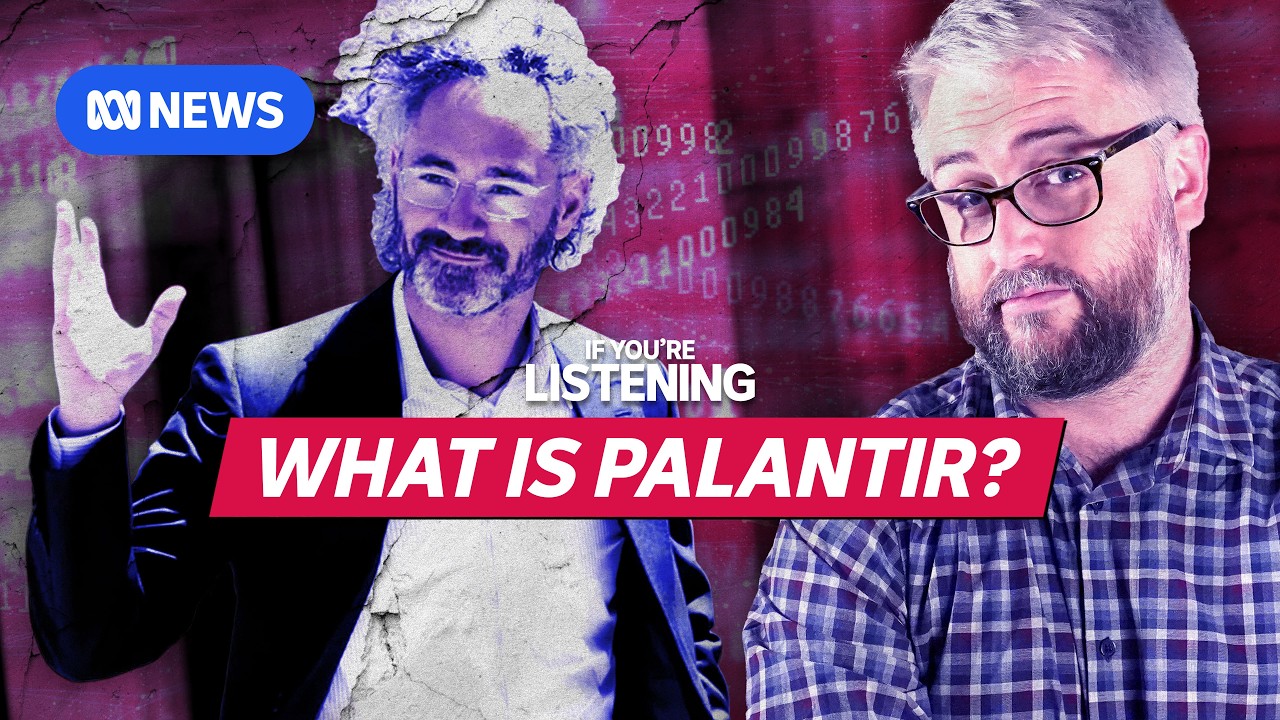
How did Palantir get so powerful? | If You're Listening
ABC News In-depth
·
May 10, 2026
Open on YouTube
Transcript
0:00
Brace yourself. I'm going to show you an
0:02
aesthetic catastrophe.
0:04
It's the worst PowerPoint slide in human
0:07
history. It was produced by the US
0:10
military in 2010 to illustrate the
0:12
difficulties they were facing during the
0:13
war in Afghanistan. When the public got
0:16
a hold of it, it became a case study for
Advertisement
0:19
how not to do PowerPoint. This is actual
0:22
slide of the Afghanistan [music]
0:24
strategy last year and it was prepared
0:27
by the staff to General Stanley
0:28
McChrystal. Listen here, Thomas.
0:30
We have met the enemy and he is
0:31
PowerPoint.
0:32
>> It was this incredibly complicated
0:34
PowerPoint chart.
0:36
>> Even the head of US forces at the time,
Advertisement
0:38
General Stanley McChrystal, knew
0:40
immediately how bad the slide was. When
0:43
the staff brought this to McChrystal,
0:45
this PowerPoint slide, he said, "When we
0:47
understand that slide, we will have won
0:49
the war." At the time, the US military's
0:51
overuse of PowerPoint was an easy
0:54
punchline for commanders when they were
0:56
giving public speeches.
0:57
>> It says in there that it is the
0:58
inalienable right of every four-star
1:00
Army general to use PowerPoint slides
1:03
when communicating relying on only
1:05
commander's intent, not detailed orders
1:08
in multicolored PowerPoint format.
1:10
Marine Corps General James Mattis was
1:12
fond of saying, "PowerPoint makes us
1:14
dumb." I have a friend who runs
1:17
Microsoft, by the way, and he doesn't
1:18
like it when I say that.
1:21
10 years later, things hadn't improved
1:24
much. Another Pentagon PowerPoint slide
1:27
that showed the way different parts of
1:29
the military were interconnected went
1:31
viral in 2020. It also was an
1:34
abomination of communication. But,
1:36
there's a reason the US military kept
1:38
spitting out these awful diagrams. They
1:41
were in the midst of a decades-long
1:42
battle to figure out how all the
1:45
different parts of the armed forces
1:47
could work together more efficiently.
1:49
The interesting thing is, in the last 3
1:51
years or so,
1:53
it appears that one company has finally
1:55
figured it all out. To maintain US and
1:58
Western military superiority requires
2:00
deliberate action and [music]
2:01
technological innovation.
2:03
At Palantir, we deliver secure,
2:05
innovative, and scalable software
2:07
solutions at speed.
2:09
You might have heard of this company,
2:11
Palantir. It seems to be the evil
2:13
multinational corporation de jure.
2:16
Largely secretive, Palantir specializes
2:19
in the shadowy practice of data mining.
2:21
For most of its existence, Palantir flew
2:23
under the radar. It was an extremely
2:26
obscure US defense contractor that few
2:28
people outside the industry had ever
2:31
heard of.
2:32
But in the last few years, it's kind of
2:33
been everywhere. So, what do you think
2:36
your local Coles has in common with CIA?
2:39
Well, they both use Palantir. Palantir
2:41
has been the top-performing stock on the
2:43
entire US stock market in 2025. Special
2:47
thanks to our sponsor, Palantir. From
2:49
the global war on terror to space domain
2:52
awareness, Palantir continues to be a
2:54
mission partner for the US and allied
2:56
nations. These days, Palantir is
2:58
involved in everything from retail to
3:00
military operations to immigration
3:02
enforcement. Up until recently, the CEO
3:05
has tried to remain out of the
3:06
spotlight, and perhaps that was for a
3:08
good reason. Because since becoming more
3:11
of a public figure, he's been saying
3:12
things like this. We are at the core
3:15
of making the obvious superiority of the
3:19
[music] West. Our product is used on
3:22
occasion to kill people. Okay-dokey.
3:25
Despite its exponential growth in size
3:28
and strategic significance, Palantir is
3:30
still a bit of a mystery to most people.
3:33
We're going to spend the next 2 weeks on
3:35
this company, taking a look at
3:37
Palantir's origin story, and how it's
3:39
grown to be one of the biggest companies
3:41
in the world. I'm Matt Bevan,
3:44
and this is If You Listen.
3:49
This story begins with a terrorist
3:51
attack on the World Trade Center in New
3:53
York City,
3:53
>> [laughter]
3:53
>> but not the one you're thinking of. This
3:56
one happened in 1993. As New Yorkers
4:00
came to terms with a possible act of
4:02
terrorism on US soil, investigators
4:05
released the first pictures of the
4:06
explosion site, leaving little doubt
4:09
that a powerful bomb was the most likely
4:11
cause.
4:12
A van packed with 550 kilos of
4:15
explosives was driven into an
4:17
underground car park of the World Trade
4:19
Center. Now, the crater is 100 ft beyond
4:21
where you're looking right now. It
4:23
blasted a hole through three floors,
4:25
killing six people instantly, and
4:27
injuring hundreds more.
4:30
For some time, it wasn't clear who was
4:32
behind the attack. As many as 19 groups
4:35
have claimed responsibility for the
4:37
explosion, but the mystery of who really
4:39
did it remains unsolved.
4:42
One of the FBI agents involved in the
4:44
investigation was John O'Neill. He'd
4:46
always wanted to be in the FBI ever
4:49
since he watched this imaginatively
4:50
titled TV show back in the 1960s. The
4:54
FBI
4:57
A QM production.
5:00
The people behind the 1993 attack were
5:03
religious extremists from Pakistan, and
5:05
John was instrumental in their capture.
5:08
He became obsessed with researching
5:10
Islamic extremism, and quickly became an
5:12
expert on the growing threat of
5:14
terrorism on American soil.
5:17
As he continued rising through the ranks
5:19
of the FBI's counterterrorism
5:21
department, he was cognizant of the
5:23
importance of balancing the need to keep
5:25
people safe with the infringement on
5:28
their personal privacy. If you have a
5:30
lot of order, there is very little
5:32
liberty.
5:34
And if you have a lot of liberty,
5:36
there tends to be less order.
5:39
And this great experiment that we call
5:41
the United States of America has a
5:43
perfect blend of ordered liberty.
5:46
Ordered liberty, a balance between
5:49
government surveillance and individual
5:51
freedom.
5:52
In the US, the government surveillance
5:54
side of the seesaw is populated by lots
5:56
of different intelligence agencies.
5:58
There's local police and the FBI keeping
6:00
an eye on people domestically,
6:02
and the CIA keeping tabs on potential
6:04
threats abroad. But in the 1990s, that
6:07
system had a serious flaw.
6:10
Each of those agencies gathered their
6:12
own data, but sharing data between them
6:15
was complicated. To understand how bad
6:17
the data sharing situation was, think
6:19
about it like this. Imagine the CIA,
6:22
FBI, and local police are represented by
6:25
individual jars, and each piece of
6:27
information they gather is a marble.
6:31
Each agency handles its own marbles. If
6:33
the FBI wants to check out the CIA's
6:35
marbles, they have to go through a
6:37
complicated process of requesting
6:40
specific ones. They have to know what
6:42
they're looking for.
6:43
And as you can see, the opening of this
6:44
CIA bottle is very narrow. It's not easy
6:47
to get an individual marble out.
6:51
As John O'Neill probed the World Trade
6:53
Center attack of 1993, he became
6:55
interested in one particular marble.
6:58
One that most counterterrorism experts
7:01
at the time weren't paying attention to.
7:03
I think if you asked most terrorism
7:05
experts in the mid-1990s, well, what
7:07
about this man, bin Laden?
7:10
Most people in the mid-1990s would have
7:12
said, "Ah, yes, the financier, the
7:15
terrorist financier." In 1998, ABC
7:18
America reporter Chris Isham, a personal
7:20
friend of John O'Neill, trekked for 10
7:22
days across Pakistan to interview the
7:25
leader of a little-known extremist group
7:27
called Al-Qaeda, Osama bin Laden.
7:30
He sat down, um, on this kind of
7:34
bench covered in red fabric, and put a
7:36
blanket kind of over his knee. It was
7:38
like sitting at story time with an old
7:40
uncle. But Chris Isham and his friend
7:43
from the FBI
7:46
>> [music]
7:46
>> shared a growing interest in this old
7:48
uncle in the Pakistani wilderness, who
7:52
during the interview seemed pretty
7:54
harmless. Bin Laden's handlers wouldn't
7:56
allow anyone to translate the shake's
7:59
answers. Miller didn't know what Bin
8:02
Laden was saying, and the Al-Qaeda
8:04
leader's monotonous, measured delivery
8:07
was deceivingly calm. It was only when
8:09
the interview was finished and the
8:10
producers sent the tapes back to be
8:12
translated that they learned what this
8:14
seemingly harmless man was saying. We do
8:17
not differentiate between those dressed
8:19
in military uniforms and civilians.
8:22
They are all targets. We predict a black
8:24
day for America and the end of the
8:26
United States. Hmm, maybe not as
8:29
harmless as he seems.
8:31
When he saw this interview, John O'Neill
8:34
became fixated on Bin Laden.
8:36
He was sure that the US was due for
8:38
another domestic attack, and that Osama
8:40
Bin Laden would be the person to do it.
8:43
He tried hard to raise the alarm within
8:46
the FBI, but it was outside of his
8:48
remit.
8:49
Chris Isham says that John started
8:51
getting frustrated that he wasn't being
8:52
taken seriously enough. He felt that the
8:56
Saudis were definitely playing games and
8:59
that that that the
9:02
senior officials in the US government
9:03
just didn't [music] get it. The problem
9:05
was that John didn't have all the
9:09
information. He couldn't see all the
9:11
marbles. He could only look at the FBI's
9:13
intelligence that they were gathering
9:14
domestically, not the stuff the CIA was
9:17
gathering in the Middle East.
9:19
His frustration began to compound. John,
9:22
because of his aggressive posture, his
9:24
aggressive nature,
9:26
his
9:27
willingness to go forward
9:30
when it may not be politically correct,
9:33
I think a few people were just
9:35
uncomfortable
9:37
with John's aggressive style. In the FBI
9:40
job which John had access to, there were
9:42
a couple of concerning marbles. You can
9:44
see those two little blue ones in here.
9:46
One blue marble is that a man with known
9:49
connections to extremist groups had
9:51
recently been arrested by the FBI while
9:53
attending a flight training school in
9:55
Minnesota.
9:57
They also had another blue marble
9:59
that suggested a coordinated effort may
10:01
be underway by Bin Laden to send people
10:04
to the US [music] to obtain training
10:06
after a number of suspicious people were
10:08
seen attending flight schools in
10:10
Arizona.
10:12
Two very interesting blue marbles, but
10:15
not enough to get the full picture.
10:19
Unbeknownst to John, over at the CIA,
10:21
they had more blue marbles.
10:24
The CIA knew that a number of
10:25
high-profile Al-Qaeda operatives were
10:27
attending planning meetings in Malaysia
10:30
and intended to travel to the United
10:32
States.
10:33
John O'Neill never saw all the marbles.
10:36
In mid-2001, he left the FBI partially
10:39
out of frustration and took a high-paid
10:41
job in the private sector, head of
10:43
security for the World Trade Center.
10:45
>> [music]
10:46
>> He died in the center's South Tower on
10:49
September 11th, 2001, just 3 weeks into
10:53
the job. The coincidence there is just
10:57
unbelievable. You couldn't write You
10:58
couldn't
10:59
You know, write about it. I mean, that's
11:01
from the guy that identified Osama bin
11:03
Laden as a villain that he was
11:06
and then the fact that
11:08
that
11:09
Osama bin Laden was able to kill him.
11:11
It's It's just amazing.
11:15
Now, if you were around back then,
11:18
you'll remember that there was
11:19
understandable concern that something
11:21
like this might happen again.
11:23
A lot of changes were made to try and
11:25
make people feel safe from terror
11:27
attacks.
11:28
And a lot of those changes were quite
11:30
annoying.
11:31
The sort of sense I had was that uh the
11:33
way we were going with just, you know,
11:35
ridiculous airport security checks and
11:38
uh super intrusive um surveillance all
11:41
the time, you know, wasn't really making
11:43
us safer. This is tech billionaire Peter
11:45
Thiel, who has some complicated opinions
11:48
about how the world should be run, which
11:50
we'll get into in the next episode of
11:52
our series. But, let's just say at this
11:54
stage
11:55
he wasn't a fan of the government trying
11:57
to intrude into people's lives in the
11:59
name of trying to stop terrorism.
12:02
He was concerned that if there were
12:03
another attack along the lines of 9/11,
12:06
the government would try to become even
12:07
more intrusive. If the World Trade
12:10
[music] Center would erode civil
12:12
liberties as much as it did in 2001, I
12:14
didn't even want to think what would
12:15
happen if you had another terrorist
12:17
attack. And so, you have to prevent it
12:19
to to stop to stop more erosion. He was
12:22
more in favor of the liberty side of
12:24
John O'Neill's ordered liberty seesaw.
12:26
Could one
12:28
>> [music]
12:28
>> do something from a libertarian or civil
12:31
liberties point of view [music] that
12:33
would still be, you know, tough on
12:35
terrorism? He and a friend named Alex
12:37
Karp started focusing on the marbles.
12:40
The government already had a lot of the
12:42
information it needed to prevent terror
12:44
attacks. It was just spread across all
12:46
these different jars.
12:47
>> [music]
12:48
>> It wasn't using the information
12:50
efficiently. Silicon Valley ought to be
12:52
involved in in in fighting terrorism and
12:55
protecting our civil liberties. Thiel
12:57
and Karp founded a company called
12:58
Palantir, named after Saruman's
13:01
all-seeing glass ball from Lord of the
13:03
Rings. A palantir is a dangerous tool,
13:06
Saruman.
13:07
Now, naming your nascent tech company
13:09
after a tool used by the very bad guy
13:12
trying to take over Middle-earth is an
13:13
interesting decision, but we'll
13:15
again, get to that a little bit later.
13:18
As far as Alex Karp and Peter Thiel were
13:19
concerned, the company was designed to
13:21
break open all the jars of marbles,
13:24
spill them out onto on surface, and make
13:27
sense of whatever came out. It would
13:29
allow humans to find needles in
13:31
haystacks. So, make the data
13:33
intelligible to you and me, which it's
13:34
not.
13:35
>> [music]
13:35
>> And by doing that, it would allow them
13:37
to find bad people trying to destroy our
13:39
society
13:40
>> [music]
13:40
>> and could be used also to protect civil
13:42
liberties by making the data sets
13:43
transparent. Palantir's first investor
13:46
was the CIA.
13:48
It's been widely reported, though never
13:50
officially confirmed, that in 2011
13:52
Palantir played a key role in processing
13:55
information which led to the killing of
13:57
Osama bin Laden in his secret compound
14:00
in Pakistan.
14:01
>> [music]
14:01
>> Palantir, uh, for example, effectively
14:03
vectored Osama bin Laden's location. So,
14:06
How exactly
14:08
>> [music]
14:08
>> does it work?
14:11
For the first decade of Palantir's
14:12
existence, basically nobody knew who
14:15
they were or what they did. They didn't
14:17
even start posting on social media until
14:19
2015. A person can [music] see a pattern
14:22
in a hundred things, but it's very hard
14:24
for them to see a pattern in a million.
14:27
The company embedded technical experts
14:29
inside classified US intelligence
14:31
operations and facilities, trying to
14:33
access as many different information
14:35
sources as possible and figure out how
14:38
they relate to each other. Sticking with
14:40
the [snorts] marble metaphor, it worked
14:42
like this. Think of this plastic box as
14:45
Palantir.
14:47
Rather than everything being siloed in
14:50
individual jars, Palantir had the
14:52
capacity to empty all the marbles out
14:54
like this.
14:57
And then sort the marbles more logically
15:00
and identify patterns
15:03
and connections. So, it meant that the
15:06
CIA marbles
15:09
could be connected with the FBI marbles
15:12
here.
15:13
And it meant that the NSA marbles
15:16
could be mixed in as well.
15:20
Sorted, organized. Gee, they have a lot
15:23
of marbles. Like really what it is is
15:25
creating a unified view
15:27
over lots of disparate data sources
15:29
which don't otherwise make sense
15:31
together. The reason they had so little
15:32
public presence is that they really only
15:35
had one customer, the US government.
15:37
>> Fighting ISIS, stopping human
15:39
trafficking, supporting money laundering
15:41
investigations. Working with the special
15:43
forces, law enforcement, the DOJ.
15:45
According to their marketing, Palantir
15:47
was all about organizing information in
15:50
a way that humans would find more
15:53
intuitive. Humans are incredible at
15:55
insight. It's just surfacing the right
15:57
information for them to see. They were
15:59
effectively creating an enormous
16:01
self-updating PowerPoint slide which
16:03
could be used by humans
16:05
to
16:06
find patterns,
16:09
find a pattern there,
16:10
circle that, connect that,
16:13
and kind of figure out what was really
16:14
going on.
16:16
Using Palantir software was like looking
16:18
down on the world from above with
16:19
information displayed on a large flat
16:22
map that you could interact with. An ICE
16:25
official said it's basically like a
16:26
Google's map interface where you can
16:28
look around the United States, you can
16:30
zoom in on targets. You then click on an
16:32
individual person and it brings up their
16:34
name, a photo.
16:36
>> We'll get into how it's being used for
16:37
immigration enforcement in our next
16:39
episode, but looking at it
16:40
dispassionately, it's clearly impressive
16:43
software.
16:45
Way better than the PowerPoint
16:47
nightmares they used to have to deal
16:48
with.
16:49
But programming these maps which
16:51
Palantir calls the ontology was slow,
16:54
painstaking work. It involved writing
16:57
enormous amounts of code in incredibly
17:00
complicated software.
17:03
And talking to a lot of different people
17:05
so that they didn't overemphasize the
17:07
importance of one particular data source
17:09
or ignore another one.
17:12
It also didn't entirely solve the marble
17:14
jar problem because each industry needed
17:17
information laid out in different ways,
17:19
the systems didn't talk to each other
17:21
perfectly. For instance, Gotham,
17:23
Palantir's military and law enforcement
17:25
software, was different from its
17:27
logistics software, which was called
17:28
Foundry.
17:30
But then something came along that put
17:32
Palantir's marble sorting tech into
17:34
hyperdrive. Let's start with this
17:36
language AI chat GPT.
17:40
What is it?
17:41
Great question. In 2022, people were
17:44
starting to get excited about the
17:45
potential uses of large language models
17:48
like chat GPT. It can create custom
17:51
code. It can create entire books that
17:53
are written from scratch that are not
17:55
plagiarized. It can write essays. Wow,
17:57
that really is amazing. But at Palantir,
18:00
they were quickly coming to a
18:01
realization.
18:02
They'd been building software that was
18:05
to be used by humans.
18:07
But the way they'd built it was also
18:09
perfect for large language models. We
18:11
were pleasantly surprised to see how
18:13
much the world we had been building for
18:15
met its moment with LLMs. Palantir's
18:17
chief technology officer, Shyam Sankar,
18:20
said that LLMs, large language models,
18:23
weren't just great at reading their data
18:24
maps,
18:25
but needed their data maps in order to
18:28
be reliable. It's like, "Wow, you
18:29
actually cannot unleash the value of an
18:31
LLM without these things." They had,
18:34
purely by luck, spent 20 years building
18:37
a system that organized data in a way
18:39
that could be intuitively read by the
18:41
new wave of AI systems.
18:44
And it was laid out in an ideal way for
18:47
the AI system to produce reliable
18:49
information. By January, it was quite
18:52
obvious that we needed to tear up all
18:54
our road maps and get excited about how
18:56
we could incorporate LLMs into our
18:58
software to provide a whole new series
19:00
of experiences. They developed something
19:02
called the Palantir AIP, which stands
19:05
for artificial intelligence platform.
19:07
AIP
19:08
is your
19:10
AI operating system. Now, individual
19:13
users didn't need to look at the marble
19:15
map at all. You can just use AIP, which
19:18
sits on top of the marble map and looks
19:20
at it for you, far faster than any human
19:23
could.
19:24
We start with a military operator
19:26
responsible for monitoring activity
19:28
within [music] Eastern Europe.
19:29
>> To use it, all you have to do is ask it
19:31
a question.
19:32
>> What enemy units are in the region?
19:34
>> The human operator can ask AIP in plain
19:36
English to deploy surveillance drones.
19:39
>> Task the MQ-9 to capture video of this
19:41
location. The drone footage shows an
19:43
enemy T-80 main battle tank. Then the
19:46
operator can ask it to look at what
19:48
options are available in the area to
19:49
destroy that tank. Generate three
19:52
courses of action to target this enemy
19:54
equipment. Send these three options to
19:56
my commander for review. Our commander
19:58
selects a course of action. Approve
20:00
course of action three.
20:03
Until pretty recently, executing this
20:05
kind of operation would have required
20:07
big maps being rolled out on tables and
20:09
little wooden figures pushed around on
20:11
top, phone calls right up and down the
20:13
chain of command. No man makes a perfect
20:16
plan, Keith. AIP allows it all to be
20:18
done as easily as asking ChatGPT to plan
20:21
your holiday to Queensland. Of course,
20:23
Matt. I can help you plan your holiday
20:26
to Queensland. You're going to have such
20:27
a great time. Not only can AI be used to
20:30
operate the Palantir software,
20:32
>> [music]
20:32
>> it can also be used to design it. What
20:35
once took software engineers years of
20:37
observing operations and writing code
20:39
now takes weeks.
20:41
This rapid increase in efficiency meant
20:44
that suddenly Palantir had a lot of
20:46
extra time and resources on its hands.
20:49
So, it started expanding. [music]
20:52
Previously, pretty much only the US
20:54
government could afford Palantir's
20:55
services. [music]
20:57
Now, it's getting into everything.
21:00
ExxonMobil is adding powerful new
21:02
features by partnering with Palantir
21:03
Technologies.
21:04
>> Today, we're in the world of customer
21:06
[music] service focusing on AIP customer
21:08
service engine.
21:09
>> So, what do you think your local Coles
21:11
has in common with the CIA?
21:13
Well, they both use Palantir. With
21:16
Palantir as the platform for making
21:17
cricket the number one team bat and ball
21:19
sport in [music] Europe. I have to say
21:21
the European cricket network has got to
21:23
be the most out of pocket of Palantir's
21:25
clients. With our entrepreneurial
21:27
intuition, we can now use [music]
21:28
Palantir to ask the right questions of
21:30
the data all in one place. Well, if they
21:32
can sort out the FBI and CIA's marbles,
21:35
they can probably handle the European
21:37
cricket networks.
21:38
This rapid expansion in clients made
21:41
markets extremely excited about
21:43
Palantir's potential future profits.
21:46
>> stocks have moved pretty ferociously
21:48
here um in the last couple of months. In
21:50
2023, Palantir stock jumped 167%
21:53
[music] in 2024, it jumped by 340%.
21:58
I think there's a golden path right now
22:00
for them to monetize
22:02
>> [music]
22:02
>> what we view as potentially a
22:03
trillion-dollar market opportunity. It's
22:06
become one of the fastest-growing
22:07
companies on Earth with clients all over
22:10
the world, including government
22:11
contracts in lots of different
22:13
countries.
22:14
And it's basically just a glorified
22:16
version of that PowerPoint slide General
22:18
McChrystal was considering during the
22:20
war in Afghanistan.
22:22
It was designed to help keep the balance
22:24
that FBI agent John O'Neill thought was
22:26
so important. And this great experiment
22:29
that we call the United States of
22:30
America
22:32
has a perfect blend of ordered liberty.
22:35
He wanted to make sure that the seesaw
22:36
didn't go too far one way or the other.
22:38
If you have a lot of order, there is
22:41
very little liberty.
22:43
And if you have a lot of liberty,
22:45
there tends to be less order. But a lot
22:47
of people are starting to think that
22:48
Palantir is tipping the balance towards
22:51
order and away from liberty. Ladies and
22:55
gentlemen, this is scary. This is us
22:58
moving towards what China is doing to
22:59
their citizens. People are really quite
23:01
scared of this company. The Palantir
23:04
surveillance state.
23:05
>> Palantir is a definite CIA front
23:07
company. There are more conspiracy
23:09
theories swirling around about Palantir
23:11
than any other Silicon Valley company.
23:13
>> Peter Thiel and his company Palantir are
23:15
some of the most evil forces on our
23:17
planet conspiring against the American
23:20
people.
23:20
>> Palantir is like a surveillance and
23:23
predictive policing firm.
23:25
>> Palantir, an organization that is run
23:29
also by a Zionist psychopath. And that's
23:32
because even though it really is just a
23:33
very fancy PowerPoint slide which makes
23:36
intelligence, military, logistics,
23:38
customer service, and cricketing
23:40
operations more efficient, its leaders
23:43
have decided to create a kind of weird
23:46
public image. We have dedicated our
23:48
company to the service of the West and
23:50
the United States of [music] America.
23:51
Palantir is here
23:54
to disrupt and when it's necessary to
23:56
scare enemies and on occasion kill them.
23:59
And we hope you're in favor of that. So,
24:02
I think it's important to spend some
24:03
time talking about this guy, Alex Karp,
24:06
and what he wants to do with his company
24:09
that now controls so much of the world's
24:12
data.
24:13
But we're not going to do it today.
24:14
We're going to spend our whole next
24:16
episode on it. And we hope you're in
24:18
favor of that. We'll see you then.
24:35
>> [music]
— end of transcript —
Advertisement
More from ABC News In-depth
 24:16
24:16
How Qatar's careful plans for security failed | If You're Listening
ABC News In-depth
 7:22
7:22
Will One Nation win the Farrer by-election? | 7.30
ABC News In-depth
 10:41
10:41
Professor Brian Cox on the big questions of the universe | 7.30
ABC News In-depth
 10:15
10:15
Coalition suggests stealth bombers could be used as AUKUS stop-gap | 7.30
ABC News In-depth