Advertisement
 22:33
22:33
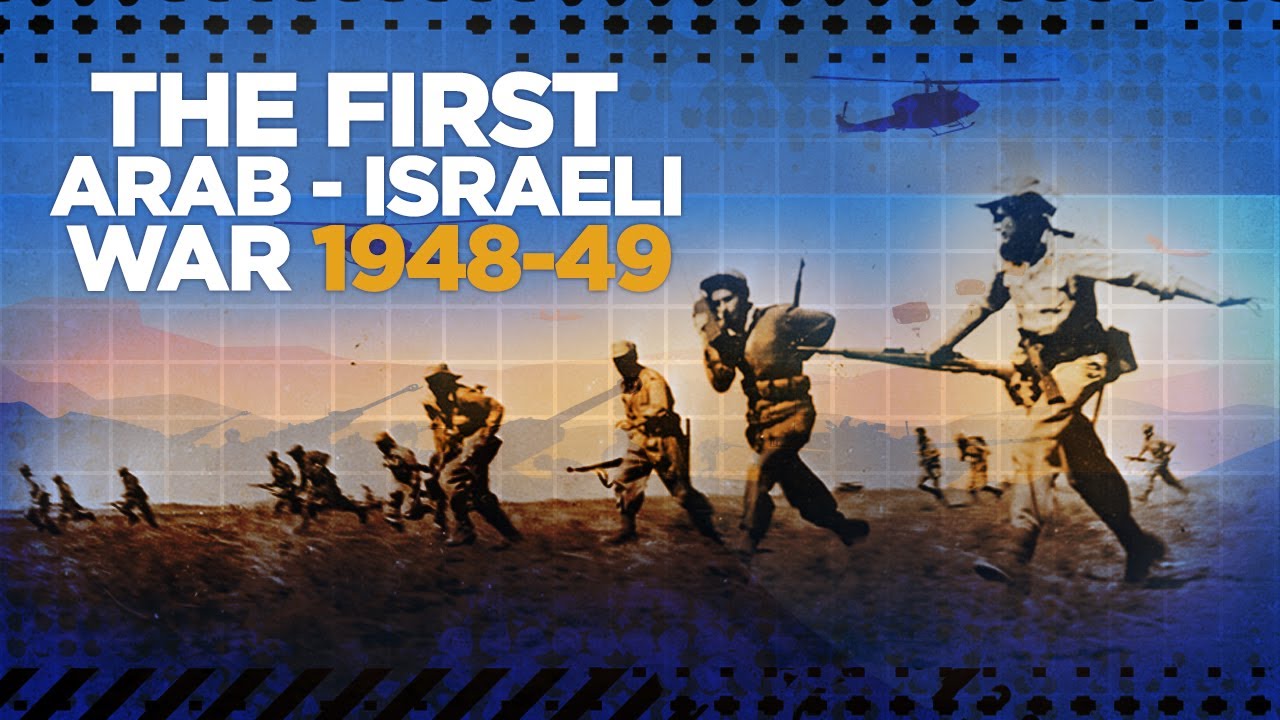
First Arab - Israeli War 1948 - COLD WAR DOCUMENTARY
Kings and Generals
·
May 11, 2026
Open on YouTube
Transcript
0:11
In one of our previous videos on modern warfare,
we covered the Six-Day War between Israeli
0:17
and the Arab States surrounding it, but this
wasn’t the first time the adversaries had
0:22
clashed. In
the aftermath of World War II, British withdrawal
0:26
from its Mandate in Palestine split open a
power vacuum into Palestinian and Jewish interests
0:33
flowed. This eventually resulted in the dawn
of Jewish statehood in the Middle-East and
0:38
the First Arab-Israeli War. Welcome to our
series on
0:43
the modern warfare! If you are interested
in the history of this era, don’t forget
0:47
to check out our
second channel – The Cold War – the link
Advertisement
0:52
Tensions between Arab Palestinian and Jewish
communities in the British Mandate of Palestine
0:57
had been increasing ever since the end of
the First World War, heightened with broken
1:02
Imperial
promises to both sides. This state of affairs
1:07
finally exploded into civil war following
the UN vote
1:10
for a partition of Palestine into Jewish and
Arab states on November 29th 1947, a solution
1:18
which
the Palestinians and the Arab League refused.
1:22
As small-scale skirmishes gradually escalated
throughout late 1947 and early 1948, Palestinian
1:29
Arab group - the Arab Liberation Army proved
incapable of defeating their better organised
1:35
opponents. Due to the chaos, tens of thousands
of
1:38
Palestinian refugees fled into neighboring
Arab states, further enflaming the public
Advertisement
1:44
of those
countries to demand war. A full-scale conflict
1:48
was prevented until in May of 1948, as the
area
1:52
was still a British Mandate, but this state
of affairs was set to expire on the 15th.
1:58
At 4PM on the
afternoon of May 14th 1948, eight hours before
2:03
British sovereignty dissolved, David Ben-Gurion
proclaimed the establishment of the State
2:09
of Israel, becoming its first prime minister.
That night,
2:13
armies of five Arab nations surrounding Israel
attacked the newly created state, starting
2:19
the First
Arab-Israeli War.
2:24
While it has been popular to tout the phrase
‘one army against seven’ to describe the
2:29
military
situation, it gives off an impression which
2:32
is incorrect - that the combined Arab nations
drastically outnumbered their enemy. A breakdown
2:38
instead shows that the total strength of about
23,500 soldiers, 10,000 of which were from
2:44
the Egyptian army. Egypt possessed the most
extensive military establishment in the region
2:50
which had also been supplied and trained by
Britain. Their ground forces were organised
2:56
into three infantry brigades, one tank brigade
comprising 50 tanks and three artillery battalions
3:03
armed with 65 howitzer artillery pieces. In
the
3:06
air, Egypt could field five squadrons of 18
fighting aircraft each and one transport squadron.
3:14
Iraq
3:15
appeared similarly powerful on the surface,
but only sent 3,000 men in the initial attack.
3:20
The
bulk of Iraqi ground forces were structured
3:23
in three divisions - two infantry and one
‘training’
3:26
division, supported by an armoured battalion
of 15 to 20 tanks and 70 to 80 artillery pieces.
3:33
The
Iraqi airforce consisted of 80 aircraft overall,
3:37
but only half of these were fully operational
and
3:39
combat ready.
In addition, the relatively elite Arab Legion
3:46
of Transjordan supplied 4,500 well trained,
British-
3:50
led soldiers. 3,000 more came from Lebanon,
3,000 from Syria and a token contingent from
3:57
Saudi Arabia. In comparison to the efforts
of their Arab enemies, the Israelis had mobilised
4:03
almost their entire resource base and able-bodied
population for the conflict, having, according
4:09
to Ben-Gurion’s diary, 29,677 troops at
the outbreak of the war. Israel had only
4:17
3 Sherman tanks
at the start of the conflict.
4:23
On the southern front, Egyptian forces launched
thrusts across the border from eastern Sinai
4:27
in a
three-pronged assault. The Egyptian command,
4:32
under the authority of General Ahmed Ali al-
Muwawi, believed it necessary to capture a
4:36
number of strongpoints in order to secure
the rear
4:39
lines. To this end, forces were committed
to assault and capture a number of Jewish
4:44
communities
in the northern Negev region, known plurally
4:48
as kibbutzim. The first target was Kfar-Darom,
a
4:52
religious 10 kilometres to the south of Gaza.
This settlement had already withstood an attack
4:58
by
fighters of the Muslim Brothers group, and
5:01
it now came under attack from the Egyptian
army.
5:05
After an initial artillery barrage, eight
tanks followed by infantry approached Kfar-Darom,
5:10
but
retreated in short order after suffering repeated
5:13
direct hits from the settlement’s only PIAT
projector and being pelted with molotov cocktails. Similar
5:20
stiff resistance was faced at the
neighboring kibbutz of Nirim, where around
5:25
40 entrenched Israeli defenders managed to
repel
5:28
sustained assaults from a thousand Egyptian
troops supported by artillery and mortar fire.
5:34
Both
settlements were eventually bypassed for fear
5:36
of stalling the main thrust. As these initial
ground
5:41
attacks were going on, airfields around Tel-Aviv
were attacked by Egyptian Spitfires, causing
5:47
heavy economic damage and moral damage. However,
the fortune of Egypt’s pilots soon turned
5:53
due to improving Israeli air defence and an
accidental strike on the British held Ramat
5:58
David
Airfield, which led to heavy losses at the
6:01
hands of British fighter aircraft. By the
end of May,
6:05
almost all of the Spitfire squadron’s planes
and a significant number of its best pilots
6:10
were lost.
On land, a meticulously planned offensive
6:14
was launched against the kibbutz of Yad-Moerdechai,
which was situated atop a hill which held
6:19
a dominating position over the main coastal
road. Its
6:23
defenders held out for five days and inflicted
heavy casualties before falling back.
6:31
The advancing Egyptian column aiming for Tel-Aviv
came to a halt around 30 kilometres south
6:36
of the city at a place called Isdud, where
it dug in. Just before sunset on May 29th,
6:43
the newly
formed Israeli Defense Forces launched Operation
6:46
Pleshet, beginning with an air attack by a
squadron of four recently imported Czech Avia
6:52
S-199. They strafed Isdud in an assault which,
while being ineffective conventionally, had
6:58
a drastic impact on morale. The Israelis were
elated
7:02
that they now had air capability, while the
Egyptians were extremely unnerved of future
7:08
attacks
from above. The next blow was struck on the
7:11
ground. Israel feared that the Egyptians would
resume their advance on Tel-Aviv, and ordered
7:17
the Giv’ati and Negev Brigades to assault
and
7:20
destroy the enemy vanguard. 2,000 Israelis
fought a 2,500 strong force of entrenched
7:27
Egyptian
troops, suffering heavy casualties after only
7:30
making slight gains. Nevertheless, Operation
Pleshet
7:34
panicked the Egyptian command, with General
Al-Muwawi informing Cairo that he ‘could
7:39
not
advance one step further’ without risking
7:42
total disaster. Any plans of advancing on
Tel-Aviv
7:46
were cancelled, and the Southern front bogged
down.
7:52
On the Jordanian front, ‘Etzioni, Palmah
Harel and Alexandroni Brigades each responsible
7:58
for
defending different areas were facing the
8:01
Arab Legion. The Legion’s push into the
West Bank
8:04
was initially relatively unopposed, with many
left-behind Legion units in Palestine facilitating
8:10
easy progress, While the First Brigade advanced
towards Nablus and fanned out around the
8:16
town, the Third Brigade headed north from
Jericho and then west, deploying around Ramallah.
8:22
Two days later, the Third Brigade’s Fourth
Regiment was ordered to the critical fort
8:27
of Latrun -
located right on top of the western approach
8:30
to Jerusalem. This key point had switched
hands
8:34
between Arab forces and Jews multiple times
just before the Mandate expired, but was occupied
8:40
by the Fourth Regiment without any trouble.
So, on May 18th, the road from the coastal
8:46
plain to
Jerusalem was severed, preventing the Israelis
8:49
from reinforcing or resupplying their troops
in
8:52
besieged Jerusalem. Around the city itself
to north and south, fighting was extremely
8:57
fierce.
Jewish forces successfully repelled Jordanian
9:04
assaults at the Notre Dame Cathedral on the
northern approaches, while a combined Arab
9:09
force - assisted by an Egyptian contingent
of
9:11
several hundred, attacked the Ramat Rachel
kibbutz from the south on May 21st. The settlement
9:17
was taken and retaken until it was eventually
secured by the defenders on May 25th. While
9:24
Jewish Jerusalem held its ground against the
persistent Legion attacks, the Jewish Quarter
9:29
of the
Old City surrendered on May 28th, with only
9:33
36 of its 300 fighters still capable of fighting.
Under the terms of surrender, civilians were
9:39
allowed to leave for Israeli-held West Jerusalem,
while soldiers and men of fighting age would
9:45
become prisoners of war. The professional
Legionnaires protected them against the locals,
9:51
even using the lethal force, escorting their
defeated foe to safety. Realising the situation
9:57
in the Holy City was worsening, Prime Minister
Ben-Gurion ordered Israeli forces to assault
10:02
the Legion-garrisoned Latrun fort and break
through
10:05
to Jerusalem. On May 25th, May 30th and June
9 th IDF launched ultimately disastrous assaults,
10:14
often by untrained troops against entrenched
Jordanian fighters. By June 10th, an alternative
10:20
route to West Jerusalem had been opened which
was dubbed the ‘Burma Road’, nicknamed
10:25
after
the British World War II supply route against
10:28
the Japanese.
In Galilee, the first phase of the war saw
10:35
Iraqi, Syrian and Lebanese forces launching
attacks into
10:38
the former Mandate. After suffering some heavy
casualties advancing through the upper Jordan
10:44
Valley, an Iraqi army of one armoured and
two infantry brigades set up in the Samaria
10:49
region,
between the towns of Nablus, Jenin and Tulkarm.
10:54
This force launched an assault towards
Natanya from these positions on May 25 th
10:59
ended in defeat, but the prospect that an
Iraqi
11:02
breakthrough could slice the Jewish state
in two worried high command so much that it
11:07
ordered a
counterattack on May 29th, aimed at occupying
11:11
strong defensive positions opposite the Iraqis.
In
11:14
the Battle of Jenin, Israeli forces occupied
the city, but were subsequently dislodged
11:20
after three
days of heavy fighting. Similarly, to their
11:24
Egyptian allies, this pyrrhic victory panicked
the Iraqi
11:27
forces and dissuaded them from attacking again.
Even further north, a Syrian force comprising
11:34
an infantry brigade, a mechanised battalion,
an artillery regiment and a company of tanks
11:39
crossed
into Israel on May 15th, seeking to storm
11:43
a cluster of kibbutzim around the Sea of Galilee
before
11:46
pushing into the Jewish heartland. The kibbutzim
resisted far longer than anticipated and the
11:52
Syrians captured Zemakh only on the 18 th
. Despite this success, the Syrians failed
11:59
to occupy
Degania, and this setback eventually forced
12:02
a withdrawal from Zemakh. They subsequently
redeployed in the hills to the east. Finally,
12:09
Lebanese forces crossed the border and captured
Malkiya on May 15th, lost it on the 18th,
12:15
and then finally recaptured it on June 6th,
only four
12:18
days before the first truce began.
12:24
The four-week UN backed truce started on June
11th was beneficial for both sides, which
12:30
began
to break the terms immediately. The Arab armies
12:34
were in desperate need of reorganisation and
replenishment, but their efforts in bolstering
12:39
the war effort was nothing compared to that
of the
12:42
Israelis. What had previously been the semi-legal
Haganah concluded its transformation from
12:47
an
underground militia into a fully-fledged army
12:50
during the truce in terms of command and control
capacity, manpower potential and weaponry.
12:56
The IDF doubled its numbers from around 35,000
to 65,000. More crucial, however, were the
13:04
massive quantities of badly-needed armament
which
13:07
reached Israeli shores. 25,000 rifles, 5,000
machine guns and more than 50 million rounds
13:14
of
ammunition from Czechoslovakia, in addition
13:18
to heavier equipment such as tanks, heavy
artillery
13:20
and armoured cars. Because of this transformation,
the army facing the Arabs after the truce
13:26
was
massively different from the force they had
13:29
met on May 15th. One British official stated
that
13:32
“The Arabs lost the initiative in Palestine
during the four weeks, and the Jews were able
13:38
to re-
equip themselves.”. This fact allowed the
13:41
IDF to subsequently seize the initiative as
the first
13:44
truce ended.
The day before hostilities were due to resume,
13:51
Egyptian forces in the south launched a series
of
13:53
attacks to solidify their stranglehold on
the Negev region. However, they were quickly
13:59
counterattacked by the IDF and spent the subsequent
8 days in heavy fighting for the region. Just
14:06
before the second truce on the 18th, the Israeli
forces managed to break through Egyptian lines,
14:12
tenuously linking the isolated Jewish Negev
settlements with the heartland. Nevertheless,
14:18
attacks
on Jewish convoys were quite frequent. In
14:21
the north, Israeli armies launched an assault
on Syrian
14:24
positions near Mishmar-Hayarden in an attempt
to push the enemy back over the Jordan River
14:30
on
the 9th. This failed, but a subsequent offensive
14:33
dubbed Operation Dekel brought Lower Galilee
under control from Haifa Bay to the Sea of
14:39
Galilee. The main IDF offensive, known as
Operation
14:43
Danny, was directed against the Arab Legion
on the Jordanian front. Israeli forces, led
14:49
by
General Yigal Allon, launched a pincer maneuver
14:52
from southwest and northwest, occupying
Lydda, then Ramle and the springs at Ras el-Ein.
14:59
When the second UN organised truth went into
effect on July 18th, the IDF had gained 1,000
15:05
square kilometres of territory and Arab pressure
on
15:08
Jerusalem had been reduced.
After UN attempts at negotiating a peace settlement
15:16
during the second truce failed, the war
entered its most intense phase on October
15:21
15th. Despite Egyptian weakness and overextension
on
15:25
the southern front, Prime Minister Ben-Gurion
realised that he needed to seize the sparsely
15:30
populated Negev region if his Jewish State
was to be secure in the long term. As things
15:36
stood, the
frontline was far too close to Israel’s
15:40
core on the Mediterranean coast. Under the
command of
15:43
General Yigal Allon, Operation Yoav was planned,
comprising three infantry brigades with
15:49
artillery and air support. Facing them was
a 15,000 strong, well-fortified Egyptian army
15:55
which
possessed heavy firepower. Nevertheless, despite
15:59
its good position, the lack of the defensive
depth was a vulnerability. At 6PM on the 15th,
16:06
the Israeli airforce of 4 Czech Avia S-199s,
7
16:11
Spitfires and 3 B-17 bombers hit the Egyptian
airfield at El’Arish and key targets in
16:17
Gaza and
Majdal from above. This air attack achieved
16:21
complete surprise, and the IAFs superior airmen
would subsequently ensure superiority in the
16:27
skies through the operation. Unfortunately,
some of
16:31
the bombing runs were off-target and many
refugees were accidentally killed at the village
16:36
of al-
Jura, one of many occasions civilians would
16:39
become unintentional casualties during this
war.
16:43
The ground attack of Yoav began in the evening,
with multiple thrusts into Israeli lines.
16:49
Fighting
continued for around a week, and by the time
16:52
it was over on the 22nd, had driven the Egyptians
from their coastal positions from Isdud to
16:58
Gaza and expelled them from the Judean and
Hebron
17:02
hills. Their extended line of defence had
been shattered and the capital of Negev - Beersheba
17:08
fell
17:09
to the IDF. To make the Egyptian situation
worse, an entire 4,000 strong brigade had
17:15
been
trapped in what would come to be known as
17:17
the Faluja pocket. They would stay trapped
for the
17:20
remainder of the war.
On the seas, minor battles took place between
17:27
Israeli and Egyptian corvettes near Majdal.
However, a more significant operation on the
17:33
22nd saw an IDF commando group use explosive-
packed boats to ram the Egyptian flagship
17:39
Emir Farouk, sinking it and damaging its
minesweeper escort. Buoyed by their successes
17:45
in the south, Operation Hiram was launched
in
17:48
Galilee by four infantry brigades led by General
Moshe Carmel. In some 60 hours of fighting,
17:55
800 Arab fighters were and taken Prisoner.
Israeli troops managed to expel the ALA and
18:01
a
Syrian battalion from Upper Galilee and also
18:04
drove all Lebanese soldiers out of Israel.
They
18:07
subsequently thrust 5 miles into Lebanon,
capturing numerous border villages and reaching
18:13
as far
as the Litani River before coming to a halt
18:16
when yet another UN ceasefire came into effect.
The
18:20
fronts largely quietened down at this point
as the two sides once again stopped to catch
18:25
their
breath. In Operations Hiram and Yoav, the
18:29
IDF had expanded Israel’s holdings, demolished
the
18:32
ALA, badly blasted apart the Egyptians and
had linked the Negev settlements with the
18:38
Jewish
heartland. It was a positive turn, but there
18:41
was still work to do.
The strains of extensive Israeli mobilisation
18:48
was becoming economically untenable. The war
had
18:52
to be ended, but the status quo, especially
on the southern front, was still unacceptable
18:57
to Jewish
leaders. Egypt remained in control of the
19:01
Gaza strip and Faluja pocket areas of Mandatory
Palestine, fortified in a chain of strong
19:07
points between 'Auja al-Hafir and Bir
Aslug - just south
19:11
of Beersheba. However, its army was on the
verge of collapse, and realistically had to
19:16
either
withdraw from Palestine completely or conclude
19:19
a peace with Israel. Neither of these methods
succeeded due to political pressures. So,
19:26
hoping to push the Arab enemy off the soil
Israel
19:29
viewed as its own, Operation Horev began on
December 22nd. It was initiated by air and
19:35
artillery
strikes on positions along the Mediterranean
19:38
coast and Gaza strip, followed by initial
ground
19:41
attacks on the northern part of the front.
Fighting at locations such as Hill 86 and
19:47
‘Abasan was
inconclusive due to strong Egyptian defences,
19:50
but it didn’t matter - these attacks were
a
19:54
diversion. Egyptian commanders had concentrated
its forces just where the IDF wanted them
20:00
to.
Israel’s main thrust was to be made against
20:04
fortifications at Bir Tamila and ‘Auja al-Hafir.
Despite initial problems due to inclement
20:11
weather, the highly mobile Eighth and Negev
Brigades
20:13
penetrated thin Egyptian lines with relative
ease. Aiming to execute a vast encirclement
20:19
maneuver which would either trap the enemy
armies or force them to retreat, IDF units
20:24
pushed
towards el-Arish and launched raids deep into
20:27
the Sinai Peninsula. This was a stunning success
and Egypt’s defeated army was made to retreat
20:34
into their own lands as far as Abu Ageila
in the
20:36
centre and el-Arish in the north, else it
risked being cut off.
20:42
However, diplomatic pressure from Britain
forced a withdrawal from Egyptian territory
20:48
after one
final attack against Rafah, bottling the Egyptian
20:52
army inside the Gaza Strip and capturing the
high ground around the town. By now, the Egyptian
20:59
government had realised the threat its forces
faced and, on the 6th of January, announced
21:04
its intention to enter peace negotiations.
On the
21:07
following day, the guns on Israel’s southern
front fell silent. On February 24th, Israeli
21:14
signed a
treaty ending hostilities, granting Egypt
21:17
the Gaza Strip and Israel the Negev region.
Now the
21:22
largest Arab nation had come to the table,
the others soon followed. Negotiations with
21:28
Lebanon
began on March 3rd and were successfully concluded
21:31
in three weeks - the international border
was respected and Israel would withdraw from
21:36
any occupied Lebanese territory. Jordanian
talks
21:40
concluded on April 3rd, with King Abdullah
retaining control of the West Bank and East
21:46
Jerusalem. Finally, after some difficulties
due to internal strife, Syria signed an armistice
21:52
on July
20th. This peace was tenuous, and the Israeli
21:56
victory made future conflict in the region
inevitable.
22:00
We are planning to cover more modern conflicts
both on the Kings and Generals and our second
22:06
channel The Cold War – the link to which
you can find in the description or in the
22:10
top right
corner, so make sure you are subscribed to
22:13
both. We would like to express our gratitude
to our
22:16
Patreon supporters and channel members, who
make the creation of our videos possible.
22:21
Now,
you can also support us by buying our merchandise
22:24
via the link in the description. This is the
Kings and Generals channel, and we will catch
22:29
you on the next one.
— end of transcript —
Advertisement
More from Kings and Generals
 21:46
21:46
Hashashins: Origins of the Order of Assassins
Kings and Generals
 20:00
20:00
Arabia Before Islam: Religion, Society, Culture DOCUMENTARY
Kings and Generals
 1:24:12
Caesar in Gaul - Roman History DOCUMENTARY
Kings and Generals
 17:52
17:52
Ashoka the Great - Rise of the Mauryan Empire Documentary
Kings and Generals