Advertisement
 20:00
20:00
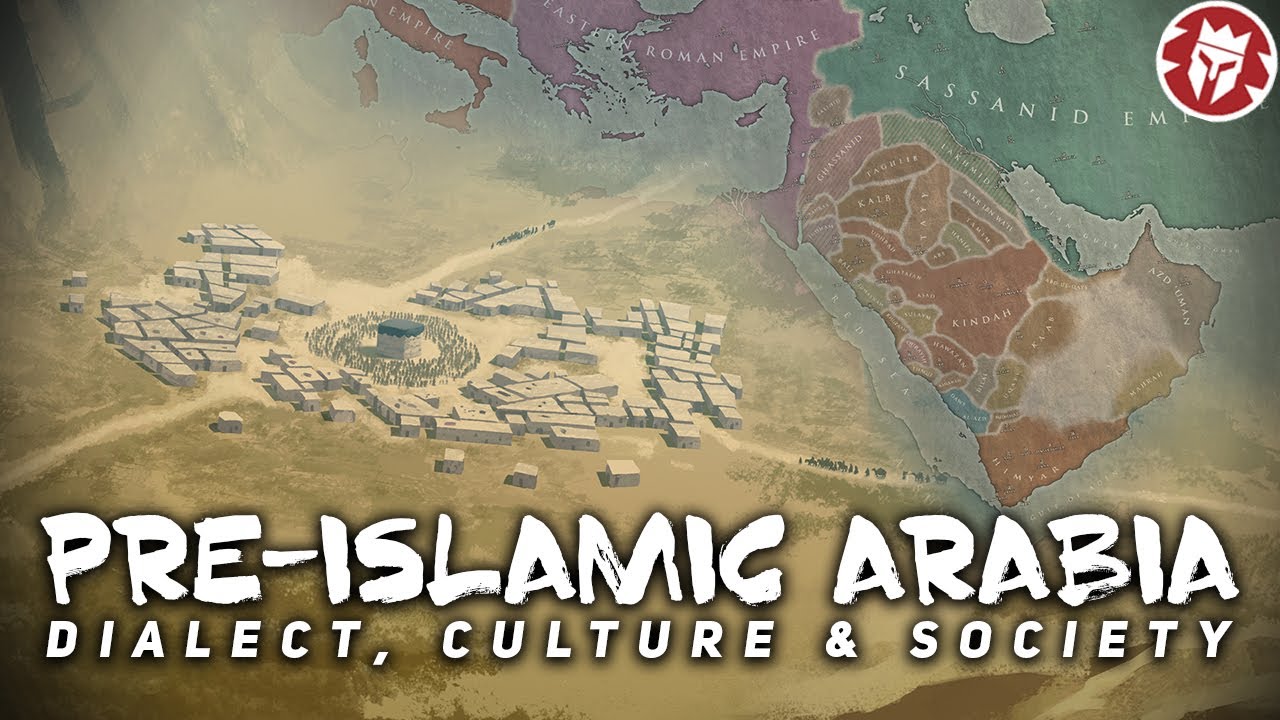
Arabia Before Islam: Religion, Society, Culture DOCUMENTARY
Kings and Generals
·
May 11, 2026
Open on YouTube
Transcript
0:06
The Arab World is mostly identified with Islam.
And for a good reason. Islam was a catalyst of the
0:13
biggest expansion of the Arabic people in history.
It paved the way for the establishment of arguably
0:19
the most powerful empire of its time, the Islamic
Caliphate, which at its zenith ranged from Spain
0:26
and North Africa in the West to Central Asia and
the Indian Subcontinent in the East. The Caliphate
0:32
managed to be one of the most dominant political,
military, scientific, and cultural centers of the
0:38
world for several centuries, while the religion
of Islam remains one of the most important
0:44
political and societal forces globally. But what
was there before Islam? How did Arab people live,
0:52
rule themselves, what did they believe in?
Welcome to our video on Arabia before Islam.
Advertisement
0:58
History is often complicated, but male hygiene
isn’t, mostly because of the sponsor of this video
1:04
Manscaped - the global brand for men’s grooming
and hygiene products! We have been promoting
1:09
Manscaped for some time now, and for a good reason
– multiple members of the team have been using
1:14
Manscaped products with great results. Manscaped
just launched its new Lawn Mower 4.0 waterproof
1:20
electric trimmer that you can enjoy when you
purchase their new Performance Package 4.0!
1:24
We highly recommend doing it, as With the
Performance Package, you never have to worry
1:28
about a complicated, multi-step grooming regimen,
as it is an all-in-one kit that includes all the
1:33
tools to perfect your grooming experience;
from your morning shower to the late-night
1:38
“be-ready-for-anything”. The Lawn Mower™ 4.0 has
these replaceable, ceramic blades with SkinSafe™
1:43
Technology and a built-in LED light to help you
trim with confidence, with no cuts or nicks.
Advertisement
1:48
When you opt-in for the full Performance
Package 4.0 kit, you get the biggest bang
1:53
for your buck! You can enroll in their PEAK
HYGIENE PLAN and get ongoing replenishment
1:57
of your favorite products delivered straight to
your door, hassle-free! Go to Manscaped.com today
2:03
and get 20% OFF + Free International Shipping plus
TWO FREE GIFTS! Click the link in the description
2:09
and join the MANSCAPED™ Movement today -
“man maintenance” for the modern gentlemen!
2:14
Pre-Islamic Arabia was mostly a nomadic society
inhabited by constantly moving tribal units.
2:22
These Bedouin tribes, some of which maintain
their traditional nomadic lifestyle to this day,
2:28
had been the most significant
political unit of the Arabian peninsula
2:32
with constantly shifting alliances, never-ending
warfare, and rare occurrences of organized
2:38
and centralized statehood. These tribes placed
heavy emphasis on kin-related groups, families
2:46
and would roam through the deserts with
their livestock mainly comprising of sheep,
2:50
goats, and camels, living in tents
with their immediate family members.
2:55
The tribal leaders enforced unwritten
rules of the Bedouin society in the
3:00
tribe. Bedouin tribes were patriarchal as the
inheritance passed on to the male offsprings,
3:05
and women could not inherit property and were
virtually rightless, as they could be seized in
3:11
tribal conflicts as a war spoil and the Bedouin
laws allowed the men to marry their captives. The
3:18
number of women a man could marry was not fixed.
When a man died, his son “inherited” all his wives
3:25
except his own mother. Women in tribal Arabia had
little say in their marriages, as they would often
3:32
be arranged between a man and his future wife’s
family and the family would receive property like
3:38
camels or horses in exchange for the bride. There
were also cases of killing of female infants,
3:44
as the Muslim holy book Quran mentions
that the Arabs of the period of ignorance
3:50
called Jahiliyyah would bury their daughters
alive. The Bedouin men often considered women
3:56
an economic burden and a potential source
of embarrassment, as the capture of women
4:01
of the tribe by hostile tribes was considered
humiliating in the conservative Bedouin society.
4:08
Under the circumstances of lack of centralized
states with rare exceptions, there were no
4:13
written laws, courts, or law enforcement of
any kind to protect the population, thus,
4:19
the principal purpose of a Bedouin tribe was to
protect its members. Vengeance was sought for the
4:26
killing of a tribe member by another tribe, which
led to virtually constant warfare and conflict.
4:32
Protecting your tribe and avenging your kin was
a high honour. Harsh living conditions of the
4:38
Arabian peninsula further enhanced the tribal
system and sense of identity within a tribe,
4:44
as often their protection and economic cooperation
was the difference between death and survival.
4:51
French historian Maxime Rodinson states that “the
free Arabs were bound by no written code of law,
4:58
and no state existed to enforce its
statutes with the backing of a police force.
5:03
The only protection for a man's life
was the certainty established by custom,
5:08
that it would be dearly bought. Blood for
blood and a life for a life. The vendetta,
5:14
tha'r in Arabic, is one of the
pillars of Bedouin society.”
5:19
Austrian historian Gustave E. von Grunebaum
reiterated this and described the state of affairs
5:26
in Arabia in the century before the rise of Islam
as “tribal guerrilla fighting, all against all.”
5:33
Tribes would fight against each other, attack
and plunder caravans and sedentary settlements,
5:39
as lawlessness was the law of the
land in most of Arabia. Caravans and
5:44
sedentary settlements would pay tributes to the
raiding Bedouin tribes to avoid their attacks.
5:50
While most of the tribes in Arabia went on with
their nomadic lifestyle, some managed to gain
5:55
influence over certain territories and switch to
sedentary life. Mecca was practically ruled by the
6:02
skilled merchants of the Quraysh tribe that took
control of the city sometime in the 5th century,
6:08
while Yathrib, which was later named Medina, was
dominated by the Arab tribes of Aus and Khazraj,
6:15
and the Jewish tribes Nadheer, Qaynuqaa,
and Qurayza. While the nomadic Bedouins
6:21
viewed the sedentary life with contempt and
thought of the town-dwellers as a “nation
6:26
of shopkeepers”, the emergence of cities like
Mecca was the primary cause of the dawn of the
6:32
common Arab identity in the pre-Islamic period.
The most important cities of the Arabian peninsula
6:39
Mecca and Yathrib are situated in Hijaz, a region
with sufficient water supply, which made it a
6:45
logical choice for a sedentary lifestyle in the
otherwise punishing climate and terrain of Arabia.
6:52
Mecca was an important trade center in the region,
6:55
a place through which the caravans would
flow, as well as the location of the Kaaba,
7:00
the sacred place in Islam, which was
also sacred in the polytheistic Arabia,
7:05
where the statues of idols and gods of different
Arabic tribes were placed. The Greek historian
7:11
Diodorus Siculus, who lived between 60 and 30
BC, wrote about the isolated region of Arabia in
7:18
his work Bibliotheca Historica, describing Kaaba
as a “very holy” temple, which was “exceedingly
7:25
revered by all Arabians”. For example, the chief
deity of the Quraysh tribe and Mecca was Hubal.
7:34
The usual trading routes through the Red Sea and
the Tigris and Euphrates were disrupted by piracy
7:40
and the Roman-Persian conflict, and caravans and
traders switched to the trade route going through
7:46
Mecca. Goods from beyond the Red Sea and of the
local Bedouin tribes would be brought to Mecca,
7:53
from where the camel caravans would transport
them to the Levant. Meccans signed treaties
7:59
with the Byzantine Empire and Bedouin tribes
for safe passage of their trading caravans.
8:05
As the home of the Kaaba, Mecca also carried a
religious significance for the polytheistic Arabs,
8:11
as once a year Arabs from all over Arabia would
make a pilgrimage to Kaaba and drink from the
8:17
sacred Zamzam Well. At this time of the year the
conflict would stop, a truce would be declared,
8:24
disputes and debts would be resolved and
trade happened between different tribes. Thus,
8:30
Mecca became a center of a loose confederation of
tribes around this city, as guests were obliged to
8:37
follow the rules in Mecca. The trading potential
of Mecca and its religious significance for the
8:43
Arabs turned it into a factor bringing Arabs
together and forming their national identity.
8:49
Another important city of Arabia was Yathrib
- Medina. It was an agricultural center
8:56
also situated in a fertile region of Hejaz,
which allowed the city to become an important
9:01
transit point for trade caravans traveling along
the Red Sea. Initially, Yathrib was dominated
9:08
by Jewish tribes, but gradually several Arabic
tribes moved to Yathrib and gained political and
9:14
economic influence in the city too. While
Arabs were mainly engaged in agriculture,
9:21
Jews would also be active as businessmen. The
rise of cities was inevitably going to lead to
9:27
the rise of commerce too, and the Rise of commerce
was inevitably going to lead to usury, a practice,
9:34
which was used both by the Arabs and Jews. This
practice would be later prohibited by Islam.
9:41
We already saw that even in pre-Islamic Arabia
religion played an important role in shaping
9:47
the common Arab identity. What religion did
the Arabs practice before the rise of Islam?
9:54
Religion in pre-Islamic Arabia was a mix of
polytheism, Christianity, Judaism, and Iranian
10:00
religions. Arab polytheism or paganism was the
most popular belief system. Each tribe, city, and
10:08
region could have its own god or idol, which was
in a way a patron of that particular community.
10:15
Arabs also believed in supernatural beings like
djinns. Statues of gods and goddesses would be
10:22
placed in Kaaba, and some scholars argue that
Allah, the deity of Islam, and other Abrahamic
10:28
religions also had a statue in Kaaba. There are
hadiths, the authenticity of which is disputed,
10:35
claiming that Kaaba also had an image of the
Virgin Mary and Baby Jesus with Abraham looking
10:41
over them. Overall, it is estimated that Kaaba
contained up to 360 such statues and images.
10:50
Trading and political relations with
the Byzantine Empire, Ethiopia, Persia,
10:55
and other neighbouring forces had a role in
shaping the religious landscape of Arabia too.
11:01
As early as the first century AD Arab traders
brought Christianity to Arabia. Others were
11:08
evangelized by Paul’s ministry in Arabia and by
St Thomas, followed by a strong influence from the
11:14
Byzantine Empire. For example, the Ghassanids, a
vassal kingdom of Rome, converted to Christianity.
11:22
In the South of the country, a strong
Christian community emerged in Najran
11:26
as a result of the influence of the Ethiopian
Christian kingdom of Aksum. Nestorian Christianity
11:33
was strong in parts of the country, but the
most popular denomination was Monophysitism.
11:39
Judaism was also a significant part
of the religious landscape of Arabia.
11:45
As a result of Roman persecution, the
migration of Jewish people to Arabia
11:50
started as early as the 1st century AD. Many
Jews found homes in Hijaz and towns like Yathrib,
11:57
Khayber, Fadak, and Umm-ul-Qura.
Many Arabs also converted to Judaism,
12:03
as often it was a condition of settling
in Jewish-dominated towns of Hijaz.
12:08
The Yemeni Himyarite Kingdom converted to Judaism
in the 4th century, and some of the Kindah,
12:15
a tribe in central Arabia who were the Himyarites’
vassals, were also converted by the 5th century.
12:22
Sources also inform about a monotheistic religion
centered around the worship of a single god of the
12:28
Abrahamic religions, but apparently, it was
not affiliated with Christianity or Judaism,
12:33
and was probably centered around the prophethood
of Abraham. Followers of this religion were
12:39
called Hanifi people, and they rejected the
idolatry and paganism of the majority of Arabs,
12:45
sharing some of the features of other Abrahamic
religions like the prohibition of pork. The
12:51
scope of expansion of the Hanifi people is
unclear, but according to some Islamic sources,
12:57
the Prophet of Islam, Muhammad,
and some of his future companions
13:01
belonged to this religion. Arabia also
had a small minority following Iran-based
13:07
religions like Zoroastrianism, Mazdakism, and
others spreading under the Persian influence.
13:14
Earlier we mentioned how in the pre-Islamic period
the Arab statehood was relatively rare, as Arabia
13:20
constantly moved from tribal anarchy to loose
state organizations and back again. But there
13:27
have been a number of notable states in Arabia in
the pre-Islamic period mentioned in Greek, Roman,
13:33
Mesopotamian, and Persian sources, oral Arab
traditions later recorded by Islamic scholars.
13:40
According to the Arab classical writers,
Arabs divided themselves into the Yamanites,
13:45
the South Arabs descended from Qahtan
and the North Arabs descended from Adnan.
13:51
It is interesting that these two groups had
certain distinctions and the existence of
13:55
statehood and political systems were among them.
South Arabia, Yemen had more established states
14:02
and all of them were ruled as monarchies.
In the North loose tribal confederations
14:08
or de facto city-states like Mecca were a more
prevalent form of statehood. Such states were
14:15
ruled as oligarchies and aristocracies.
The South was considered more advanced,
14:20
as it was the key route of trade in Arabia, prior
to the emergence of Mecca as an alternative, and
14:27
a higher degree of contacts with outsiders such
as Ethiopians. From the fourth century onwards a
14:33
reverse process started, as many Southern tribes
migrated to the North and underwent the Northern
14:40
influence. The South Arabian script vanished
and the North Arabian proliferated in Arabia.
14:47
The Thamud tribe or tribal union was one
of the first recorded states in Arabia,
14:52
which was a prominent force in Northwestern
Arabia, according to the Assyrian sources
14:57
related to the 8th century BC and were later used
as auxiliary forces by the Roman Empire according
15:04
to the Roman sources. In the 3rd century BC, the
Greek scholar Eratosthenes mentioned Minaeans,
15:12
Sabaeans, Qatabanians, and Hadramites as the
main peoples inhabiting the Arabian peninsula.
15:18
Historians mention the independent Sabaean Kingdom
situated in present-day Yemen, which was later
15:25
conquered by the Himyarite Kingdom around 280 AD.
The Himyarite Kingdom was one of the most
15:31
prominent pre-Islamic states of the Arabian
peninsula. It was ruled by a monarch,
15:37
but in practice, the power in the state
was shared with the regional governors,
15:41
which had a high degree of autonomy, a system
akin to the medieval era European kingdoms. By the
15:48
early 4th century AD the Himyarite Kingdom ruled
over Southern Arabia and expanded North to Najran.
15:55
Originally polytheistic Himyarites became
monotheistic sometime in the 4th century
16:00
with a belief in the Abrahamic God. At the end
of the fifth century the Himyarite king Abu
16:07
Kariba adopted Judaism as his faith. His son and
successor Yusuf Dhu Nuwas was even more zealous,
16:14
as he started persecuting Christians living in
the Kingdom. This proved to be the undoing of the
16:20
Himyarite dynasty as Dhu Nuwas was either killed
or committed suicide after being defeated by the
16:26
Christian coalition of the Ethiopian Kingdom of
Aksum, the Byzantine Empire and South Arabian
16:32
Christians in 524. Christian Ethiopians then took
control of South Arabia, built a church in Sana
16:40
in an attempt to attract pilgrims, and hence trade
to Sana in place of Mecca. This caused a conflict
16:47
between Abraha, the Ethiopian viceroy in Yemen,
and Mecca mentioned in the Quran. Apparently,
16:54
Abraha used war elephants against Mecca, but was
unsuccessful and had to turn back. The second
17:00
part of the 6th century was notable for the
power struggle between Ethiopians and Sasanid
17:06
for control over the remainder of the Himyarite
Kingdom, in which the Persian empire succeeded.
17:12
Another prominent pre-Islamic state organization
in Arabia was the Kinda Kingdom, the first
17:19
state in central Arabia recorded by history,
which came to existence after the Kinda tribe
17:24
managed to unite all tribes in Najd around the
late 5th century. The Kinda Kingdom attempted a
17:31
number of successful raids on the Byzantine
territories in North Arabia, but similar
17:36
endeavors against the Sasanid Empire failed,
when in 529 the Lakhmid vassals of the Persians
17:43
defeated and killed the Kindan king al-Harit bin
Amr, which caused the decline of this state. The
17:50
aforementioned Lakhmid Kingdom was established
in East Arabia by the Banu Lakhm tribe around
17:56
the 3rd-4th centuries. Initially, independent
Lakhmids were threatening the coastal cities
18:03
of the Sassanid empire and in 325 the Sassanid
emperor Shapur II began a campaign against them.
18:10
Soon the Lakhmid capital Hira was taken under
control of the Sasanids. Since then the Lakhmid
18:17
kingdom became vassals of the Sasanid Empire until
it was annexed by them in the early 7th century.
18:24
The Ghassanid Kingdom had a similar fate.
Some time in the 3rd century AD part of
18:30
the Al-Azd tribe migrated from Yemen to the
Levant and established the Ghassanid Kingdom
18:35
as a vassal of the Eastern Roman Empire with
a capital of Jabiyah in the Golan Heights.
18:41
The Ghassanid Kingdom ceased its existence
in the period of early Islamic expansion.
18:47
But none of these kingdoms were powerful and
centralized enough to unite Arabs in one state
18:53
and protect the realm from foreign attacks.
Most of Arabia was governed by unwritten
18:59
rules of the Bedouin society causing warfare and
despair amidst already harsh living conditions.
19:06
The pre-Islamic Arabs might have shared similar
language and traditions, but they were divided by
19:12
tribal identities, blood revenge, and religions.
But very soon Arabia and beyond would be
19:19
transformed by a momentous process of emergence of
Islam and the creation of a unified Arabic state.
19:27
More videos on the ancient civilizations are
on the way, so make sure you are subscribed and
19:32
have pressed the bell button to see the next
video in the series. Please, consider liking,
19:37
commenting, and sharing - it helps immensely.
Our videos would be impossible without our kind
19:42
patrons and youtube channel members, whose ranks
you can join via the links in the description
19:48
to know our schedule, get early access
to our videos, access our discord,
19:52
and much more. This is the Kings and Generals
channel, and we will catch you on the next one.
— end of transcript —
Advertisement
More from Kings and Generals
 17:52
17:52
Ashoka the Great - Rise of the Mauryan Empire Documentary
Kings and Generals
 15:58
15:58
Six-Day War (1967) - Third Arab–Israeli War DOCUMENTARY
Kings and Generals
 17:53
17:53
Muslim Schism: How Islam Split into the Sunni and Shia Branches
Kings and Generals
 1:24:12
Caesar in Gaul - Roman History DOCUMENTARY
Kings and Generals