Advertisement
 20:32
20:32
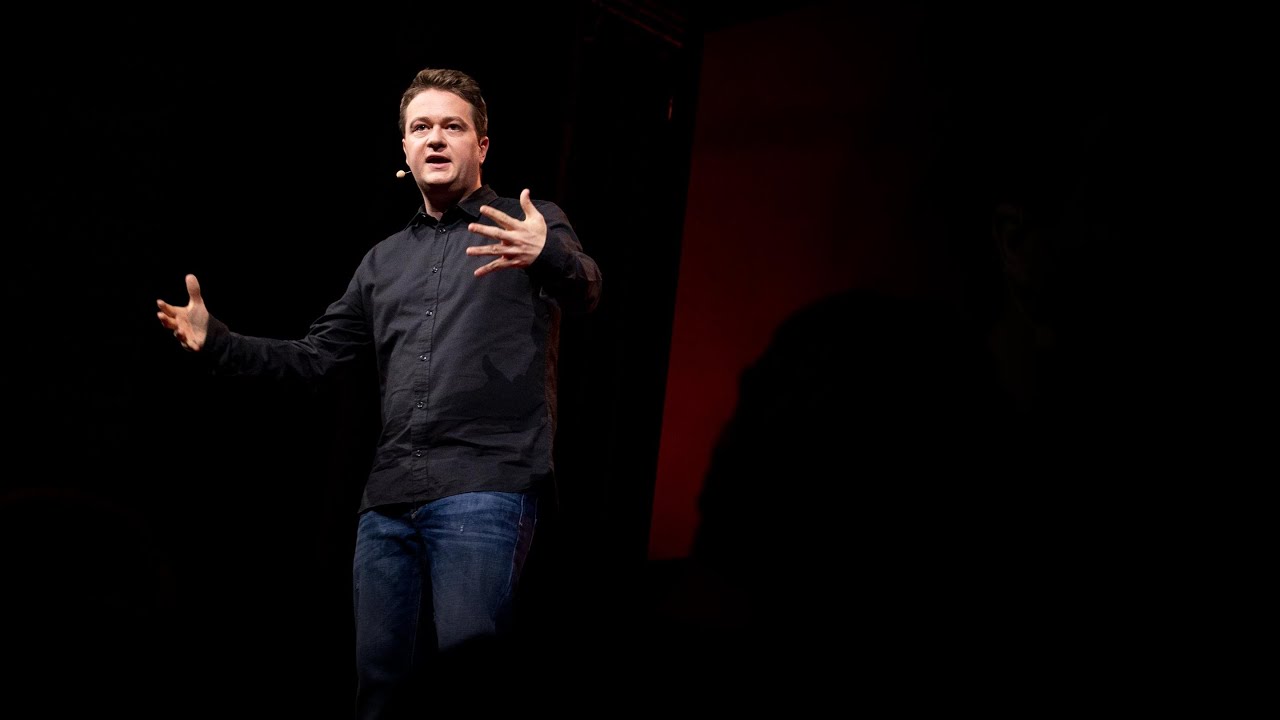
This could be why you're depressed or anxious | Johann Hari | TED
TED
·
May 10, 2026
Open on YouTube
Transcript
0:13
For a really long time,
0:14
I had two mysteries
that were hanging over me.
0:18
I didn't understand them
0:20
and, to be honest, I was quite afraid
to look into them.
0:24
The first mystery was, I'm 40 years old,
0:27
and all throughout my lifetime,
year after year,
0:30
serious depression and anxiety have risen,
0:34
in the United States, in Britain,
Advertisement
0:37
and across the Western world.
0:39
And I wanted to understand why.
0:43
Why is this happening to us?
0:45
Why is it that with each year that passes,
0:48
more and more of us are finding it harder
to get through the day?
0:51
And I wanted to understand this
because of a more personal mystery.
0:55
When I was a teenager,
0:56
I remember going to my doctor
0:58
and explaining that I had this feeling,
like pain was leaking out of me.
1:03
I couldn't control it,
Advertisement
1:04
I didn't understand why it was happening,
1:06
I felt quite ashamed of it.
1:09
And my doctor told me a story
1:10
that I now realize was well-intentioned,
1:12
but quite oversimplified.
1:14
Not totally wrong.
1:15
My doctor said, "We know
why people get like this.
1:18
Some people just naturally get
a chemical imbalance in their heads --
1:22
you're clearly one of them.
1:24
All we need to do is give you some drugs,
1:26
it will get your chemical
balance back to normal."
1:28
So I started taking a drug
called Paxil or Seroxat,
1:30
it's the same thing with different names
in different countries.
1:33
And I felt much better,
I got a real boost.
1:36
But not very long afterwards,
1:37
this feeling of pain started to come back.
1:39
So I was given higher and higher doses
1:41
until, for 13 years, I was taking
the maximum possible dose
1:45
that you're legally allowed to take.
1:47
And for a lot of those 13 years,
and pretty much all the time by the end,
1:50
I was still in a lot of pain.
1:52
And I started asking myself,
"What's going on here?
1:55
Because you're doing everything
1:56
you're told to do by the story
that's dominating the culture --
2:00
why do you still feel like this?"
2:02
So to get to the bottom
of these two mysteries,
2:05
for a book that I've written
2:06
I ended up going on a big journey
all over the world,
2:09
I traveled over 40,000 miles.
2:10
I wanted to sit with the leading
experts in the world
2:13
about what causes depression and anxiety
2:15
and crucially, what solves them,
2:17
and people who have come through
depression and anxiety
2:19
and out the other side
in all sorts of ways.
2:21
And I learned a huge amount
2:23
from the amazing people
I got to know along the way.
2:26
But I think at the heart
of what I learned is,
2:29
so far, we have scientific evidence
2:32
for nine different causes
of depression and anxiety.
2:35
Two of them are indeed in our biology.
2:38
Your genes can make you
more sensitive to these problems,
2:41
though they don't write your destiny.
2:43
And there are real brain changes
that can happen when you become depressed
2:46
that can make it harder to get out.
2:48
But most of the factors
that have been proven
2:50
to cause depression and anxiety
2:52
are not in our biology.
2:55
They are factors in the way we live.
2:58
And once you understand them,
2:59
it opens up a very different
set of solutions
3:02
that should be offered to people
3:04
alongside the option
of chemical antidepressants.
3:07
For example,
3:09
if you're lonely, you're more likely
to become depressed.
3:12
If, when you go to work,
you don't have any control over your job,
3:15
you've just got to do what you're told,
3:17
you're more likely to become depressed.
3:19
If you very rarely get out
into the natural world,
3:22
you're more likely to become depressed.
3:23
And one thing unites a lot of the causes
of depression and anxiety
3:27
that I learned about.
3:28
Not all of them, but a lot of them.
3:30
Everyone here knows
3:32
you've all got natural
physical needs, right?
3:34
Obviously.
3:35
You need food, you need water,
3:38
you need shelter, you need clean air.
3:40
If I took those things away from you,
3:42
you'd all be in real trouble, real fast.
3:44
But at the same time,
3:46
every human being
has natural psychological needs.
3:50
You need to feel you belong.
3:52
You need to feel your life
has meaning and purpose.
3:55
You need to feel that people
see you and value you.
3:57
You need to feel you've got
a future that makes sense.
4:00
And this culture we built
is good at lots of things.
4:03
And many things are better
than in the past --
4:05
I'm glad to be alive today.
4:07
But we've been getting less and less good
4:09
at meeting these deep,
underlying psychological needs.
4:13
And it's not the only thing
that's going on,
4:16
but I think it's the key reason
why this crisis keeps rising and rising.
4:20
And I found this really hard to absorb.
4:24
I really wrestled with the idea
4:26
of shifting from thinking of my depression
as just a problem in my brain,
4:31
to one with many causes,
4:32
including many in the way we're living.
4:34
And it only really began
to fall into place for me
4:36
when one day, I went to interview
a South African psychiatrist
4:40
named Dr. Derek Summerfield.
4:41
He's a great guy.
4:43
And Dr. Summerfield
happened to be in Cambodia in 2001,
4:46
when they first introduced
chemical antidepressants
4:50
for people in that country.
4:51
And the local doctors, the Cambodians,
had never heard of these drugs,
4:55
so they were like, what are they?
4:56
And he explained.
4:58
And they said to him,
4:59
"We don't need them,
we've already got antidepressants."
5:02
And he was like, "What do you mean?"
5:04
He thought they were going to talk about
some kind of herbal remedy,
5:07
like St. John's Wort, ginkgo biloba,
something like that.
5:11
Instead, they told him a story.
5:14
There was a farmer in their community
who worked in the rice fields.
5:18
And one day, he stood on a land mine
5:20
left over from the war
with the United States,
5:22
and he got his leg blown off.
5:23
So they him an artificial leg,
5:25
and after a while, he went back
to work in the rice fields.
5:28
But apparently, it's super painful
to work under water
5:30
when you've got an artificial limb,
5:32
and I'm guessing it was pretty traumatic
5:34
to go back and work in the field
where he got blown up.
5:36
The guy started to cry all day,
5:39
he refused to get out of bed,
5:40
he developed all the symptoms
of classic depression.
5:43
The Cambodian doctor said,
5:45
"This is when we gave him
an antidepressant."
5:47
And Dr. Summerfield said,
"What was it?"
5:50
They explained that they went
and sat with him.
5:53
They listened to him.
5:56
They realized that his pain made sense --
5:59
it was hard for him to see it
in the throes of his depression,
6:01
but actually, it had perfectly
understandable causes in his life.
6:05
One of the doctors, talking to the people
in the community, figured,
6:09
"You know, if we bought this guy a cow,
6:11
he could become a dairy farmer,
6:13
he wouldn't be in this position
that was screwing him up so much,
6:16
he wouldn't have to go
and work in the rice fields."
6:18
So they bought him a cow.
6:20
Within a couple of weeks,
his crying stopped,
6:22
within a month, his depression was gone.
6:24
They said to doctor Summerfield,
6:25
"So you see, doctor, that cow,
that was an antidepressant,
6:28
that's what you mean, right?"
6:30
(Laughter)
6:31
(Applause)
6:34
If you'd been raised to think
about depression the way I was,
6:37
and most of the people here were,
6:38
that sounds like a bad joke, right?
6:40
"I went to my doctor
for an antidepressant,
6:42
she gave me a cow."
6:43
But what those Cambodian
doctors knew intuitively,
6:46
based on this individual,
unscientific anecdote,
6:49
is what the leading
medical body in the world,
6:53
the World Health Organization,
6:55
has been trying to tell us for years,
6:57
based on the best scientific evidence.
7:00
If you're depressed,
7:02
if you're anxious,
7:04
you're not weak, you're not crazy,
7:08
you're not, in the main,
a machine with broken parts.
7:12
You're a human being with unmet needs.
7:15
And it's just as important to think here
about what those Cambodian doctors
7:19
and the World Health Organization
are not saying.
7:21
They did not say to this farmer,
7:23
"Hey, buddy, you need
to pull yourself together.
7:26
It's your job to figure out
and fix this problem on your own."
7:29
On the contrary, what they said is,
7:31
"We're here as a group
to pull together with you,
7:35
so together, we can figure out
and fix this problem."
7:40
This is what every depressed person needs,
7:44
and it's what every
depressed person deserves.
7:47
This is why one of the leading
doctors at the United Nations,
7:50
in their official statement
for World Health Day,
7:53
couple of years back in 2017,
7:54
said we need to talk less
about chemical imbalances
7:57
and more about the imbalances
in the way we live.
8:00
Drugs give real relief to some people --
8:02
they gave relief to me for a while --
8:05
but precisely because this problem
goes deeper than their biology,
8:09
the solutions need to go much deeper, too.
8:12
But when I first learned that,
8:15
I remember thinking,
8:16
"OK, I could see
all the scientific evidence,
8:19
I read a huge number of studies,
8:20
I interviewed a huge number of the experts
who were explaining this,"
8:23
but I kept thinking, "How can we
possibly do that?"
8:26
The things that are making us depressed
8:28
are in most cases more complex
than what was going on
8:30
with this Cambodian farmer.
8:32
Where do we even begin with that insight?
8:34
But then, in the long journey for my book,
8:38
all over the world,
8:39
I kept meeting people
who were doing exactly that,
8:42
from Sydney, to San Francisco,
8:44
to São Paulo.
8:45
I kept meeting people
who were understanding
8:48
the deeper causes
of depression and anxiety
8:50
and, as groups, fixing them.
8:52
Obviously, I can't tell you
about all the amazing people
8:55
I got to know and wrote about,
8:57
or all of the nine causes of depression
and anxiety that I learned about,
9:00
because they won't let me give
a 10-hour TED Talk --
9:03
you can complain about that to them.
9:04
But I want to focus on two of the causes
9:06
and two of the solutions
that emerge from them, if that's alright.
9:10
Here's the first.
9:12
We are the loneliest society
in human history.
9:15
There was a recent study
that asked Americans,
9:18
"Do you feel like you're no longer
close to anyone?"
9:21
And 39 percent of people
said that described them.
9:25
"No longer close to anyone."
9:26
In the international
measurements of loneliness,
9:28
Britain and the rest of Europe
are just behind the US,
9:31
in case anyone here is feeling smug.
9:33
(Laughter)
9:34
I spent a lot of time discussing this
9:36
with the leading expert
in the world on loneliness,
9:38
an incredible man
named professor John Cacioppo,
9:40
who was at Chicago,
9:42
and I thought a lot about one question
his work poses to us.
9:44
Professor Cacioppo asked,
9:47
"Why do we exist?
9:48
Why are we here, why are we alive?"
9:50
One key reason
9:53
is that our ancestors
on the savannas of Africa
9:56
were really good at one thing.
9:58
They weren't bigger than the animals
they took down a lot of the time,
10:01
they weren't faster than the animals
they took down a lot of the time,
10:04
but they were much better
at banding together into groups
10:07
and cooperating.
10:09
This was our superpower as a species --
10:11
we band together,
10:12
just like bees evolved to live in a hive,
10:15
humans evolved to live in a tribe.
10:17
And we are the first humans ever
10:22
to disband our tribes.
10:24
And it is making us feel awful.
10:27
But it doesn't have to be this way.
10:29
One of the heroes in my book,
and in fact, in my life,
10:31
is a doctor named Sam Everington.
10:33
He's a general practitioner
in a poor part of East London,
10:36
where I lived for many years.
10:38
And Sam was really uncomfortable,
10:40
because he had loads of patients
10:41
coming to him with terrible
depression and anxiety.
10:44
And like me, he's not opposed
to chemical antidepressants,
10:46
he thinks they give
some relief to some people.
10:49
But he could see two things.
10:50
Firstly, his patients were depressed
and anxious a lot of the time
10:54
for totally understandable
reasons, like loneliness.
10:57
And secondly, although the drugs
were giving some relief to some people,
11:01
for many people,
they didn't solve the problem.
11:03
The underlying problem.
11:05
One day, Sam decided
to pioneer a different approach.
11:08
A woman came to his center,
his medical center,
11:11
called Lisa Cunningham.
11:12
I got to know Lisa later.
11:14
And Lisa had been shut away in her home
with crippling depression and anxiety
11:18
for seven years.
11:20
And when she came to Sam's center,
she was told, "Don't worry,
11:23
we'll carry on giving you these drugs,
11:25
but we're also going to prescribe
something else.
11:28
We're going to prescribe for you
to come here to this center twice a week
11:31
to meet with a group of other
depressed and anxious people,
11:34
not to talk about how miserable you are,
11:37
but to figure out something
meaningful you can all do together
11:41
so you won't be lonely and you won't feel
like life is pointless."
11:44
The first time this group met,
11:47
Lisa literally started
vomiting with anxiety,
11:49
it was so overwhelming for her.
11:51
But people rubbed her back,
the group started talking,
11:53
they were like, "What could we do?"
11:55
These are inner-city,
East London people like me,
11:58
they didn't know anything about gardening.
12:00
They were like, "Why don't we
learn gardening?"
12:02
There was an area
behind the doctors' offices
12:04
that was just scrubland.
12:05
"Why don't we make this into a garden?"
12:07
They started to take books
out of the library,
12:09
started to watch YouTube clips.
12:11
They started to get
their fingers in the soil.
12:13
They started to learn
the rhythms of the seasons.
12:16
There's a lot of evidence
12:18
that exposure to the natural world
12:19
is a really powerful antidepressant.
12:21
But they started to do something
even more important.
12:25
They started to form a tribe.
12:27
They started to form a group.
12:29
They started to care about each other.
12:31
If one of them didn't show up,
12:32
the others would go
looking for them -- "Are you OK?"
12:35
Help them figure out
what was troubling them that day.
12:38
The way Lisa put it to me,
12:39
"As the garden began to bloom,
12:42
we began to bloom."
12:44
This approach is called
social prescribing,
12:46
it's spreading all over Europe.
12:48
And there's a small,
but growing body of evidence
12:50
suggesting it can produce real
and meaningful falls
12:53
in depression and anxiety.
12:55
And one day, I remember
standing in the garden
12:59
that Lisa and her once-depressed
friends had built --
13:01
it's a really beautiful garden --
13:03
and having this thought,
13:04
it's very much inspired by a guy
called professor Hugh Mackay in Australia.
13:08
I was thinking, so often
when people feel down in this culture,
13:12
what we say to them -- I'm sure
everyone here said it, I have --
13:15
we say, "You just need
to be you, be yourself."
13:19
And I've realized, actually,
what we should say to people is,
13:22
"Don't be you.
13:24
Don't be yourself.
13:26
Be us, be we.
13:28
Be part of a group."
13:30
(Applause)
13:33
The solution to these problems
13:36
does not lie in drawing
more and more on your resources
13:39
as an isolated individual --
13:41
that's partly what got us in this crisis.
13:43
It lies on reconnecting
with something bigger than you.
13:45
And that really connects
to one of the other causes
13:48
of depression and anxiety
that I wanted to talk to you about.
13:51
So everyone knows
13:52
junk food has taken over our diets
and made us physically sick.
13:56
I don't say that
with any sense of superiority,
13:58
I literally came to give
this talk from McDonald's.
14:01
I saw all of you eating that
healthy TED breakfast, I was like no way.
14:04
But just like junk food has taken over
our diets and made us physically sick,
14:10
a kind of junk values
have taken over our minds
14:14
and made us mentally sick.
14:16
For thousands of years,
philosophers have said,
14:19
if you think life is about money,
and status and showing off,
14:23
you're going to feel like crap.
14:25
That's not an exact quote
from Schopenhauer,
14:27
but that is the gist of what he said.
14:29
But weirdly, hardy anyone
had scientifically investigated this,
14:32
until a truly extraordinary person
I got to know, named professor Tim Kasser,
14:36
who's at Knox College in Illinois,
14:38
and he's been researching this
for about 30 years now.
14:40
And his research suggests
several really important things.
14:43
Firstly, the more you believe
14:47
you can buy and display
your way out of sadness,
14:51
and into a good life,
14:53
the more likely you are to become
depressed and anxious.
14:56
And secondly,
14:58
as a society, we have become
much more driven by these beliefs.
15:02
All throughout my lifetime,
15:04
under the weight of advertising
and Instagram and everything like them.
15:08
And as I thought about this,
15:10
I realized it's like we've all been fed
since birth, a kind of KFC for the soul.
15:16
We've been trained to look for happiness
in all the wrong places,
15:19
and just like junk food
doesn't meet your nutritional needs
15:22
and actually makes you feel terrible,
15:25
junk values don't meet
your psychological needs,
15:28
and they take you away from a good life.
15:30
But when I first spent time
with professor Kasser
15:33
and I was learning all this,
15:35
I felt a really weird mixture of emotions.
15:37
Because on the one hand,
I found this really challenging.
15:40
I could see how often
in my own life, when I felt down,
15:43
I tried to remedy it with some kind of
show-offy, grand external solution.
15:49
And I could see why that
did not work well for me.
15:52
I also thought,
isn't this kind of obvious?
15:55
Isn't this almost like banal, right?
15:57
If I said to everyone here,
15:58
none of you are going to lie
on your deathbed
16:01
and think about all the shoes you bought
and all the retweets you got,
16:04
you're going to think about moments
16:06
of love, meaning
and connection in your life.
16:08
I think that seems almost like a cliché.
16:10
But I kept talking
to professor Kasser and saying,
16:12
"Why am I feeling
this strange doubleness?"
16:15
And he said, "At some level,
we all know these things.
16:18
But in this culture,
we don't live by them."
16:21
We know them so well
they've become clichés,
16:23
but we don't live by them.
16:24
I kept asking why, why would we know
something so profound,
16:27
but not live by it?
16:29
And after a while,
professor Kasser said to me,
16:32
"Because we live in a machine
16:35
that is designed to get us to neglect
what is important about life."
16:39
I had to really think about that.
16:40
"Because we live in a machine
16:42
that is designed to get us
to neglect what is important about life."
16:46
And professor Kasser wanted to figure out
if we can disrupt that machine.
16:50
He's done loads of research into this;
16:51
I'll tell you about one example,
16:53
and I really urge everyone here
to try this with their friends and family.
16:57
With a guy called Nathan Dungan,
he got a group of teenagers and adults
17:00
to come together for a series of sessions
over a period of time, to meet up.
17:04
And part of the point of the group
17:06
was to get people to think
about a moment in their life
17:09
they had actually found
meaning and purpose.
17:12
For different people,
it was different things.
17:14
For some people, it was playing music,
writing, helping someone --
17:18
I'm sure everyone here
can picture something, right?
17:21
And part of the point of the group
was to get people to ask,
17:24
"OK, how could you dedicate
more of your life
17:26
to pursuing these moments
of meaning and purpose,
17:29
and less to, I don't know,
buying crap you don't need,
17:32
putting it on social media
and trying to get people to go,
17:35
'OMG, so jealous!'"
17:36
And what they found was,
17:38
just having these meetings,
17:39
it was like a kind of Alcoholics Anonymous
for consumerism, right?
17:43
Getting people to have these meetings,
articulate these values,
17:46
determine to act on them
and check in with each other,
17:49
led to a marked shift in people's values.
17:52
It took them away from this hurricane
of depression-generating messages
17:56
training us to seek happiness
in the wrong places,
17:59
and towards more meaningful
and nourishing values
18:02
that lift us out of depression.
18:05
But with all the solutions that I saw
and have written about,
18:08
and many I can't talk about here,
18:11
I kept thinking,
18:12
you know: Why did it take me so long
to see these insights?
18:16
Because when you explain them to people --
18:18
some of them are more
complicated, but not all --
18:21
when you explain this to people,
it's not like rocket science, right?
18:24
At some level, we already
know these things.
18:26
Why do we find it so hard to understand?
18:29
I think there's many reasons.
18:31
But I think one reason is
that we have to change our understanding
18:35
of what depression
and anxiety actually are.
18:39
There are very real
biological contributions
18:41
to depression and anxiety.
18:44
But if we allow the biology
to become the whole picture,
18:47
as I did for so long,
18:49
as I would argue our culture
has done pretty much most of my life,
18:53
what we're implicitly saying to people
is, and this isn't anyone's intention,
18:57
but what we're implicitly
saying to people is,
19:00
"Your pain doesn't mean anything.
19:02
It's just a malfunction.
19:03
It's like a glitch in a computer program,
19:06
it's just a wiring problem in your head."
19:10
But I was only able to start
changing my life
19:13
when I realized your depression
is not a malfunction.
19:18
It's a signal.
19:20
Your depression is a signal.
19:23
It's telling you something.
19:24
(Applause)
19:29
We feel this way for reasons,
19:31
and they can be hard to see
in the throes of depression --
19:34
I understand that really well
from personal experience.
19:37
But with the right help,
we can understand these problems
19:40
and we can fix these problems together.
19:43
But to do that,
19:44
the very first step
19:46
is we have to stop insulting these signals
19:48
by saying they're a sign of weakness,
or madness or purely biological,
19:53
except for a tiny number of people.
19:55
We need to start
listening to these signals,
19:58
because they're telling us
something we really need to hear.
20:02
It's only when we truly
listen to these signals,
20:07
and we honor these signals
and respect these signals,
20:11
that we're going to begin to see
20:13
the liberating, nourishing,
deeper solutions.
20:19
The cows that are waiting all around us.
20:23
Thank you.
20:24
(Applause)
— end of transcript —
Advertisement
More from TED
 12:54
12:54
How to Make Learning as Addictive as Social Media | Duolingo's Luis Von Ahn | TED
TED
 10:46
10:46
The secrets of learning a new language | Lýdia Machová | TED
TED
 20:50
20:50
The Power of Vulnerability | Brené Brown | TED
TED
 12:47
12:47
What Makes a Good Life? Lessons from the Longest Study on Happiness | Robert Waldinger | TED
TED