Advertisement
 7:35
7:35
Transcript
0:00
In the history of space, one rocket
0:02
stands out as an icon not only at the
0:04
space race but also as the mighty power
0:07
is symbolized, that one rocket which is
0:10
still the tallest, heaviest and most
0:12
powerful ever built was the Saturn V
0:15
and was designed to take men to the moon
0:17
and later launched to the first American
Advertisement
0:20
space station Skylab but if things have
0:23
been a little bit different back in the
0:24
1960s we might have had a different
0:26
rocket to hang on the bedroom walls of
0:29
the space fans of the 70s and 80s. In the
0:32
early 1960s a rocket was designed that
0:35
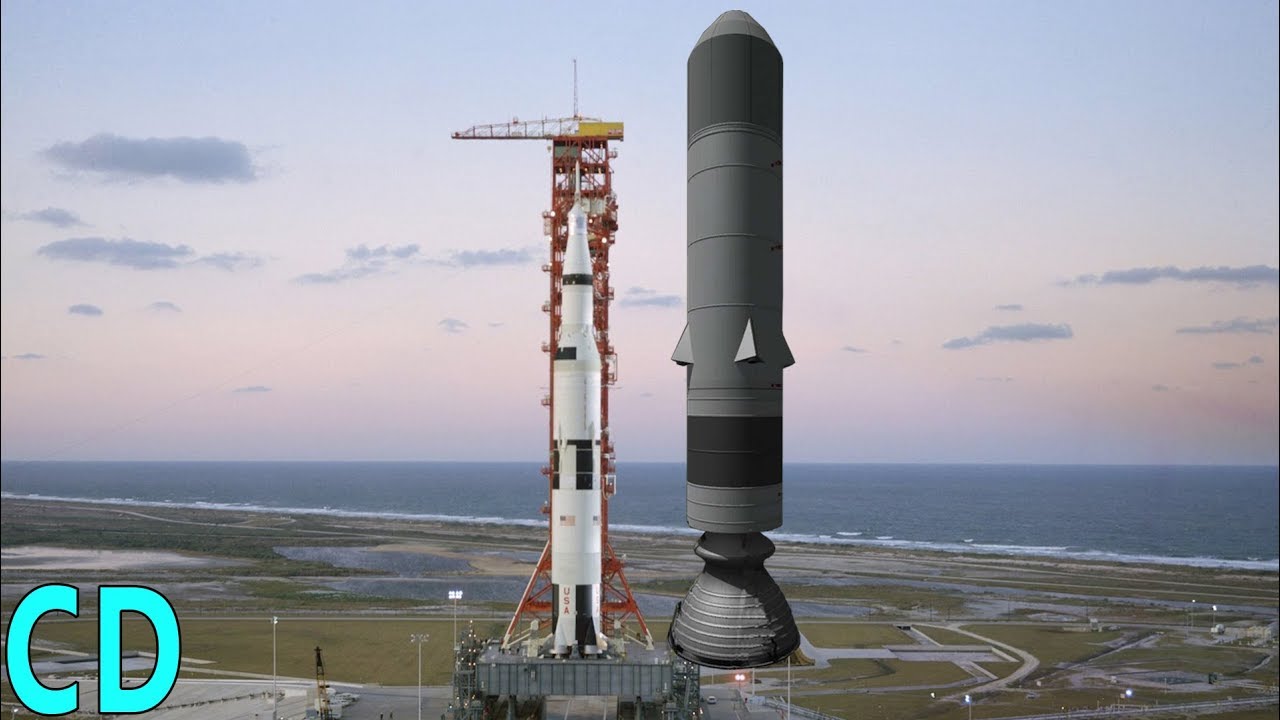
made the Saturn V looks small by
0:37
comparison. This was called the sea
0:40
dragon a super heavy lift rocket that
0:43
would have been ten times more powerful
Advertisement
0:45
with 80 million pounds of thrust
0:47
compared to the Saturns 7.8 million and
0:51
that was from just one massive engine. It
0:56
was designed to lift a payload of 1,100,000 lbs
0:58
into
1:01
orbit compared to the
1:03
310,000 lbs of a Saturn V. This
1:05
meant but it could have lifted an entire
1:07
space station into low-earth orbit in
1:11
one mission. The rocket bell of this
1:14
single engine would be so large at 75
1:17
feet in diameter that you could fit the
1:20
entire first stage of a Saturn V with
1:22
all five of it's F-1 engines inside with
1:25
room to spare. So what happened to the
1:28
Sea Dragon a why didn't it get built. At
1:31
the time of a design in 1962 it was
1:34
thought by the 1970s, 80s and beyond
1:36
thousands of people would be working in
1:39
space and on the moon even on Mars and
1:42
as such rockets with huge lifting
1:44
capabilities would have been in great
1:46
demand because they would have
1:48
dramatically lower the cost of getting
1:50
materials into space. The Sea Dragon was
1:53
designed by Robert Truax, a US Navy
1:56
Captain and rocket engineer. He was one
1:58
of the pioneers of American rocketry and
2:01
worked on the Thor and Polaris missiles
2:03
amongst others.
2:04
His team debriefed the German rocket
2:07
engineers at the end of World War II
2:08
including Verner von Braun who went on
2:11
to design the Saturn V. Truax believed
2:14
that it was complexity that drove up the
2:17
cost of rockets and not their size. His
2:20
designs for the Sea Dragon made it very
2:22
simple yet very large. The Sea Dragon
2:26
would have been 75 feet in diameter and
2:29
500 feet tall, half the height of the
2:33
Chrysler Building. This type of low-cost
2:36
super heavy rocket is now known as a big
2:39
dumb booster due to its simplistic
2:41
design. Instead of having very
2:43
complicated turbo pump driven engines
2:46
like the Saturn's, his were the simplest
2:48
possible design for a rocket engine. In
2:51
place of having powerful fuel pumps to
2:54
push huge amounts of rocket fuel and
2:56
oxidizer into the engine, he proposed a
2:58
pressure fed system with a separate
3:01
liquid nitrogen tank to pressurize the
3:03
fuel tanks. This would push the fuel into
3:06
the massive combustion chamber. His
3:09
engines were literally not much more
3:11
than the valve to turn on the fuel and
3:13
the huge engine bell. This would make
3:15
them not only much cheaper to
3:17
manufacture but more reliable and much
3:19
easier to refurbish and reuse unlike the
3:22
f-1 engines of a Saturn which were left
3:25
to crash into the sea and be discarded.
3:27
The rocket would be of a two-stage
3:30
design the first stage would lift it to
3:32
a height of 130,000 feet before it
3:34
separated and then fell back into the
3:37
sea using drag bags to slow its impact
3:40
with the water, where it would then be
3:42
recovered for reuse. Although the design
3:46
was much less efficient than a Saturn,
3:48
the overall increase in size made up
3:51
that shortfall so in theory it would be
3:53
much cheaper per pound of payload
3:55
compared to smaller rocket systems even
3:57
ones the size of a Saturn. However there
4:00
are problems in making such a huge
4:02
rocket firstly just transporting the parts
4:05
let alone the fully assembled version.
4:07
This together with the 80 million pounds
4:10
of thrust meant but it could not be launched from land.
4:13
This amount of thrust would have
4:15
destroyed any existing launch pad. It's
4:19
estimated that the noise level at
4:20
takeoff would have been around 165
4:23
decibels, five miles away or the
4:27
equivalent of standing next to a 5,000
4:29
horsepower top fuel dragster at full
4:32
throttle. Then there was the exhaust
4:34
plume this would have been up to one
4:36
mile long. For these reasons the Sea
4:40
Dragon would have been launched at sea, hence the name.
4:42
Not from a floating platform
4:44
but from beneath the water. Now this is
4:48
not as mad as it seems and there have
4:50
been examples of sea launch rockets
4:52
before and after. In 2002 a low-cost sea
4:56
launch rocket delivery system called the
4:58
Aquarius with a very similar design to
5:00
the Sea Dragon but much smaller was
5:02
proposed to deliver consumables in to
5:05
low-earth orbit for supplying things
5:07
like the space station but failed to
5:09
get selected. Then there was the US Navy
5:11
which also did research into floating
5:13
launch rockets and found that the
5:15
take-off or smoother and less stressful
5:18
on the rocket than that of a normal
5:20
land-based takeoff. And if you're
5:22
wondering why the water doesn't put out
5:24
the flames it's because the rocket has
5:27
its own liquid oxygen supply just like
5:29
the Rockets that work in space where
5:30
there is no air and the thrust just
5:33
blows the water out of the engine bell.
5:35
In fact the sea makes an excellent
5:37
launch platform as it's indestructible
5:40
it requires very little in the way of
5:42
support systems which makes it very
5:44
cheap, it also provides excellent shock
5:47
and noise oppression and even allowing
5:49
for a slight swell, the density of water
5:51
helps guide to rock it up in the initial
5:53
moments of lift off till it the exits of
5:56
water. As part of a low-cost build and
5:59
the size of Sea Dragon, it would have
6:02
been built in a shipyard a bit like a
6:04
submarine from commonly used materials
6:07
including aluminium, sheet nickel steel
6:09
and stainless steel for the engine Bell.
6:11
It would have then been floated into
6:13
position and fueled allowing it to sink
6:15
so that just the top was sticking out of
6:17
water and it would have been supported
6:19
by flotation tanks under
6:21
rocket. one idea was to use a nuclear
6:24
aircraft carrier to provide the power to
6:26
electrolyze the sea water to make the
6:28
hydrogen and oxygen rocket fuel, although
6:31
the first stage would have been powered
6:33
by RP1 or Kerosene and oxygen, the second
6:37
stage was powered by hydrogen and oxygen.
6:39
Although smaller scale versions called
6:42
the Sea Bee and the Sea Horse were made to
6:45
prove that they could be launched from
6:46
underwater the project came to an end
6:49
when due to budget cuts NASA's future
6:52
projects branch was closed. But even if
6:55
it had had been built it would have been
6:57
a very short life, it was just too big, there
7:01
just wasn't enough stuff to be lifted
7:04
into space to make the economies of
7:06
scale it promised viable. The technology is
7:09
still as perfectly valid today as it was
7:11
in the 1960s and maybe at some point in
7:15
the future when a large amount of
7:17
equipment is needed to be lifted into
7:19
space economically something of a
7:21
similar scale might find a role once
7:24
more and as always thanks for watching
7:27
and please subscribe, rate and share.
— end of transcript —
Advertisement