Advertisement
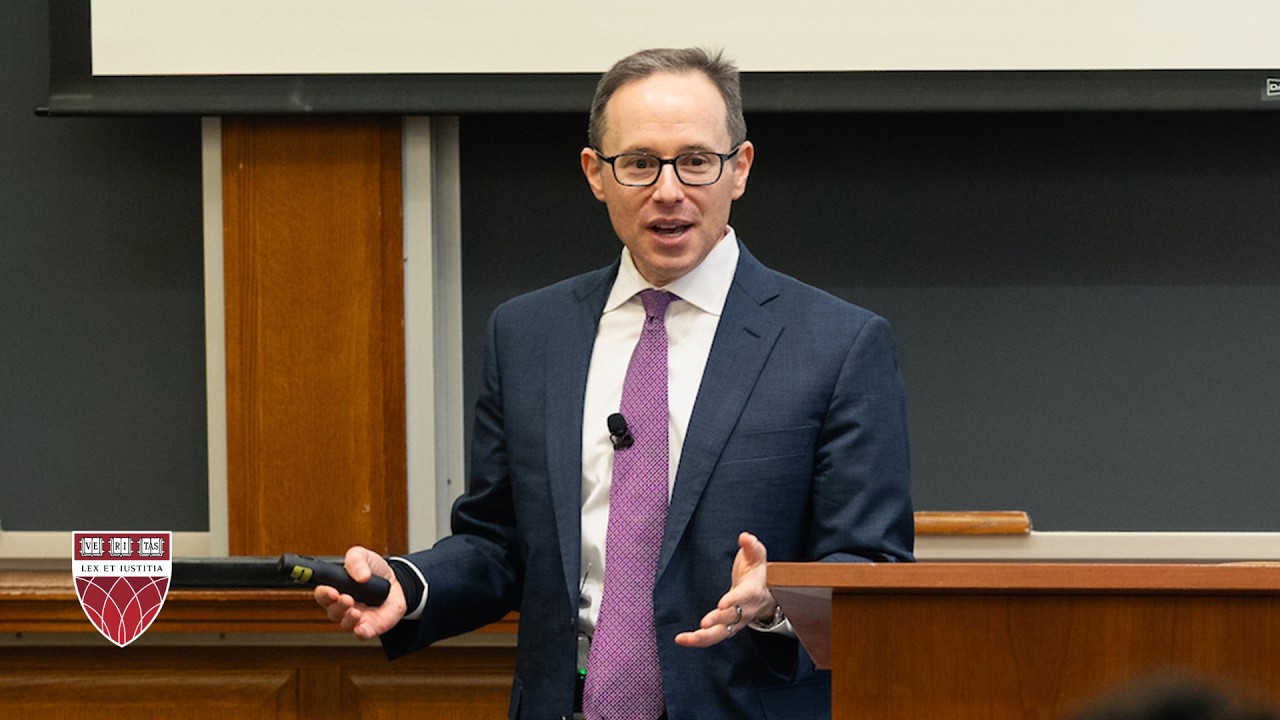 50:13
50:13
Last Lecture: Robert Sitkoff on resolving disputes through law, not ‘baseball bat’
Harvard Law School
·
May 11, 2026
Open on YouTube
Transcript
0:00
Well, good afternoon everyone. It is so
0:02
amazing to see so many familiar faces,
0:04
especially coming out of such an amazing
0:06
barristers this past Saturday. Thank you
0:09
all so much for being here. My name is
0:11
Gabby Mestre. I'm one of your class of
0:13
2026 class marshals and it is a distinct
0:16
honor to kick off our last lecture
Advertisement
0:18
series today and introduce the brilliant
0:21
Professor Robert Sitkoff. Professor
0:23
Robert Sitkoff is the Austin Wakeman
0:25
Scott Professor of Law and the John L.
0:27
Gray Professor of Law. He's an expert in
0:30
many many fields. Trust me, if I told
0:32
you all of his accomplishments, I would
0:34
be the one giving the lecture today and
0:35
not him.
0:37
Um, but he specializes in wills, trusts,
Advertisement
0:39
estates, and fiduciary administration.
0:41
Professor Sitkoff clerked for then Chief
0:43
Judge Richard Posner of the United
0:45
States Court of Appeals for the Seventh
0:47
Circuit. He taught at both NYU and
0:49
Northwestern before joining the Harvard
0:51
Law School faculty in 2007, where he
0:54
became the youngest professor to receive
0:56
a chair in the history of the school.
0:58
Professor Sitkoff has been published in
1:01
leading scholarly journals such as the
1:02
Yale Law Journal, the Stanford Law
1:04
Review, the Columbia Law Review, the
1:06
Journal of Law and Economics, and many
1:08
many others. Professor Sitkoff is a
1:10
co-author of Wills, Trusts, and Estates,
1:12
the most popular American coursebook on
1:14
Trusts and Estates, and he is a
1:15
co-editor of the Oxford Handbook of
1:17
Fiduciary Law.
1:19
Professor Sitkoff's research has been
1:20
featured in the New York Times, Wall
1:22
Street Journal, and Financial Times,
1:24
amongst other media.
1:26
He's an active participant in Trusts and
1:27
Estates law reform. He serves on the
1:29
Uniform Law Commission as a commissioner
1:32
for Massachusetts. He previously served
1:34
as a member of several other drafting
1:36
committees for Uniform Trusts and
1:37
Estates Acts, including as chair of the
1:40
drafting committee for the Uniform
1:41
Directed Trust Act. And on a personal
1:44
note, I took Professor Sitkoff's Trusts
1:45
and Estates class last year and found it
1:47
to be one of the best classes I've taken
1:49
here at the law school. So, now, without
1:52
further ado, I know none of you are here
1:53
to hear me speak. Please help me in
1:55
welcoming Professor Robert Sitkoff.
1:58
>> [applause]
1:58
>> Thank you.
2:00
That's very kind. Thank you.
2:04
Uh, well, thank you. That's a
2:06
That's a very generous and kind um
2:09
uh, introduction. Um
2:13
So, let me say something about uh, what
2:15
what you just said and then I'll get
2:17
into some of the things I wanted to say.
2:18
So, um, from time to time people make
2:20
that comment about uh, the youngest
2:22
chair. So, I'm going to tell you this
2:23
the true story what actually happened.
2:25
So, I was a visitor here in uh, spring
2:27
of um
2:29
uh, spring of 2007.
2:31
Elena Kagan was the dean at the time.
2:33
Uh, it was a good time to visit Harvard.
2:35
It was a period of promiscuous hiring,
2:37
so it was a good time to visit. And uh,
2:39
anyway, the faculty had a meeting and
2:42
voted my offer. Elena came to the office
2:44
and she we talked for a while and then
2:47
she got up to leave. You know by now
2:49
Colombo? Like she turned at the door,
2:50
she turned around, "Oh, one more thing.
2:52
If you If you say yes, you'll be the
2:54
John L. Gray uh, Professor of Law." I
2:56
said, "Oh my goodness, that's that's
2:58
amazing. That's really early in career.
2:59
I'm 31." And I said, "That's pretty
3:02
early to have a uh, chair. Oh my
3:04
goodness." And she said, "Well, the the
3:06
donor restricted it to a specialist in
3:07
Trusts and Estates, what else am I
3:08
supposed to do with it?"
3:10
So, that's actually what what what
3:12
happened. Okay, anyway, um, so I I thank
3:14
you for inviting me to do this. It's
3:17
it's a quite an honor. Um, one of the
3:19
reasons I moved here now
3:22
about 20 years ago was for you, for the
3:25
students. Your curiosity and energy
3:29
and engagement, uh, hunger to grow and
3:31
learn has been exciting and really the
3:33
best part of the job. It's made me a
3:35
better teacher, a better scholar, better
3:38
lawyer. You have over the years,
3:41
including the last 2 years, held me
3:42
accountable, forced me to think harder
3:45
and deeper about uh, issues. A little
3:47
bit later in this talk, I'm going to
3:49
quote a line that one of you wrote in
3:52
your exam and I've lifted and put in the
3:54
casebook as it's a good it's a good
3:56
line. But also, you have been um,
3:59
unfailingly generous. As some of you
4:01
know, the past year or two has been a
4:04
little bit rough
4:05
for me. My father died, I got a
4:07
concussion, each of my three children
4:09
had significant health issues, one
4:11
needed a surgery. It's been a bumpy
4:13
couple of years and throughout that
4:15
whole period, you've all been
4:17
People taking the classes in particular
4:19
have been
4:20
uncommonly generous and accommodating my
4:23
bumpiness and not, you know, there was
4:25
the one class I had to leave partway
4:26
through to go lie down because of my
4:28
head and whatever. And so thank you. So,
4:31
last lecture, I mean, I hope it's not my
4:34
last
4:35
lecture. I mean, it could be, but that's
4:37
not the, you know, hope for the best,
4:38
but plan for the worst. That's my That's
4:40
our field's motto. I don't think it's
4:42
going to be the last. People are
4:43
laughing. I mean that for real. Hope for
4:45
the best, but plan for the worst.
4:47
So, I I I don't think it's actually
4:49
going to be the last lecture, but I do
4:51
suspect that for many of you, this will
4:53
be my last chance to indoctrinate.
4:56
Right? The last chance to tell you some
4:58
things that I think are important that I
5:00
think will be are important to me for
5:01
you to understand as you embark on being
5:04
a lawyer, as you embark on the journey
5:06
of the rest of your life. And I I hope
5:09
it's not the last chance. I hope you
5:10
will stay in in touch and reach out and
5:13
email. Email's easy, right?
5:15
I'm in Hauser or whatever, but I
5:16
understand for many this will be.
5:18
So, I I puzzled for a little while about
5:20
what what could I tell you? You know,
5:22
what what would I what would what would
5:23
I want to do in this last lecture?
5:25
So, the problem is I have a pretty
5:27
narrow range of knowledge.
5:29
I
5:30
I
5:31
I I know a lot about Trusts and Estates
5:33
and fiduciary law. I also know about
5:35
classic Star Trek, coaching Little
5:37
League, and the Yankees,
5:39
making pancakes. None of this seemed
5:41
like really appropriate. So, I went back
5:45
and I gave one of these some years ago.
5:46
Was it 10 years ago? I looked at that
5:48
video and I I thought, "What have I
5:50
learned since then?" And first thing
5:52
came to mind was how to do colonoscopy
5:54
preps.
5:56
But that seemed like not also what we
5:58
should do uh
6:00
We could, if we we maybe the Q&A, we can
6:02
uh
6:03
So, my family said, "Don't talk about
6:05
colonoscopy." So, I win. There I did it.
6:07
Uh,
6:08
so let me tell you what I did. I I dug
6:09
up the outline, dug up my notes from
6:11
that. And what I was struck as I looked
6:13
at those notes from all those years ago
6:15
when I did one of these talks, what I
6:16
was really struck by
6:18
was the very different perspective, my
6:20
very different understanding of what I
6:22
told that class those years ago.
6:24
Right? And so, what I want to do today,
6:27
and that's reflects 10 years of growth,
6:29
right? 10 years of learning, 10 more
6:30
years of experience than you, 10 more
6:32
years of just life.
6:34
And so, what I want to do today is I'm
6:37
going to talk about a variety several of
6:39
the same things I talked about then, but
6:41
from a refreshed lens with what is the
6:44
current my current state of development.
6:47
And in doing that, what I'm trying to
6:48
model for you is the never-ending
6:51
growth, right? The idea that you will
6:53
continue to learn and develop as a
6:55
lawyer, as a person, as a child, a
6:58
sibling, a partner, whatever. The idea
7:00
that you need to keep learning. You need
7:02
to keep growing. You want to keep
7:03
reevaluating what you think you know
7:06
and look at these things afresh. So,
7:08
here's what we're going to do. I'm going
7:09
to tell you I'm going to try to tell you
7:11
some things that I wish I knew. I wish
7:14
that I knew when I was you. Right? When
7:16
I was getting ready to graduate and go
7:18
out. So, I want to tell you four things
7:19
that I didn't really understand then and
7:22
I think in truth, I didn't even really
7:24
understand 10 years ago. I mean, I
7:26
thought I did and I talked about them in
7:27
that talk, but I understand them
7:29
differently now and I'm sure in 10
7:31
years, I'll understand them even
7:32
differently then. But I want to talk to
7:34
you about what I think I understand
7:36
now.
7:38
You don't have to accept my vision. You
7:40
don't have to accept these things that
7:41
I'm going to be telling you. I want to
7:43
offer this as a kind of as a idea for
7:46
you to take in and then absorb and do
7:49
with what you wish. Right? Take this
7:50
into the full body of your development
7:53
as a person, as a lawyer, whatever else.
7:56
But mostly, what I want to do is get you
7:58
thinking. I want you to look at this as
8:00
a broad picture. You're about to enter a
8:02
learned profession. And that term
8:05
learned for a learned profession has
8:06
real meaning. Right? It's not just that
8:08
we're self-regulating and the like. It's
8:10
that it's a profession that requires
8:13
study. It requires learning. People are
8:16
coming to you for your learning and for
8:18
what you can think, what you can do for
8:21
them. And so, I want to push you a
8:22
little bit. So, this is going to be a
8:24
last lecture
8:25
about the law and specifically law that
8:29
you're going to be doing. And even more
8:30
specifically, I'm going to tell you what
8:33
I think is my what I'm going to tell you
8:35
what is my understanding of the law that
8:37
many of you are going to be doing and
8:39
why it matters and what I think is your
8:42
responsibility
8:43
to your clients, to the practice of law,
8:46
and to society
8:48
as a member of this learned profession.
8:51
And I think I narrow this into four
8:53
takeaways, four buckets. Let me tell you
8:55
what these four buckets what these four
8:57
buckets are going to be. So, one is not
9:00
a shock for people who took the class. I
9:01
want to say a little bit about the
9:02
relationship between public and private
9:04
law.
9:05
I want to say something about the
9:06
relationship between public and private
9:08
law. This is foundational. This is
9:10
definitional. This is something that
9:11
we're going to need to all have this
9:13
conversation, which is not really a
9:14
conversation, but it's the polite way to
9:16
say it. So, to have this conversation,
9:18
we need to have we need to have a common
9:20
vocabulary. All right. The second thing
9:22
is I want to say something about private
9:24
law and private ordering, which is the
9:26
law that most of you are going to be
9:28
doing.
9:29
And I want to tell you what I think it
9:31
is that you'll be doing and why it
9:33
matters. I want to say why it matters
9:35
cuz I I think that's where rule of law
9:38
really has power and I think that's
9:40
where it affects people on the ground.
9:43
So, the claim I'm going to be making is
9:44
this is retail law.
9:46
That private ordering, private law is
9:48
retail law. This is what not just what
9:50
most of you are going to be doing,
9:52
but this is what many of your clients
9:55
are coming to coming to you for in their
9:58
day-to-day life.
10:00
And I think it is unfairly denigrated in
10:03
elite law schools. I think that we don't
10:06
give enough attention and time to the
10:08
significance of private ordering. We do
10:10
not encourage you to go practice in this
10:13
area. We don't congratulate you for the
10:15
contributions you make in doing it, and
10:17
yet we send most of you out to do that.
10:19
And I think you should feel really good
10:20
about it. I think it's absolutely
10:21
essential. And I want to tell you why.
10:24
Okay, the third bucket which follows
10:27
from that is your role as lawyer. And I
10:30
mean this on the one hand as a
10:31
fiduciary.
10:33
So, as a member of this learned
10:34
profession to whom your client turns for
10:36
help.
10:37
But also in terms of your responsibility
10:40
for what the law is going forward. It's
10:42
a long tradition in these talks for
10:45
folks up here to be telling you about
10:46
your responsibility as a lawyer, but
10:49
it's usually in a public law frame and
10:51
at the end of the Republic as we know it
10:52
unless you do something or another.
10:55
So, I I I want to make a subtly
10:56
different claim. I want to say that your
10:58
role in um
11:01
uh policing the reform of private law is
11:05
absolutely essential to the development
11:07
law and even more so now for a variety
11:10
of developments in the nature of private
11:13
law, increased codification, right? In
11:16
the disfiguring of statutory
11:19
interpretation because of public law
11:21
battles and so on. So, I want to say a
11:23
little bit about the role you're going
11:24
to play and what that matters and that's
11:26
the
11:27
um
11:28
public service aspect of being a member
11:30
of a learned profession. There is a
11:32
public service aspect in the private law
11:35
domain also and that's the thing I want
11:36
to talk about. All right. So, then
11:38
there's number four. So, number four is
11:40
going to be to tie these three together.
11:42
I want to offer you a competing vision
11:45
of rule of law.
11:48
This is weirdly maybe a subversive
11:50
notion of rule of law. I want to suggest
11:54
rule of law as private ordering as
11:57
private law.
11:58
Right? So, instead of talking about rule
12:00
of law as in the organization of civil
12:02
society, people and the state, public
12:04
law. I want to talk about rule of law
12:06
from the standpoint of we order your
12:08
personal and professional affairs with
12:11
other people and we enforce it, we
12:13
resolve it, we make it work through law
12:16
rather than through baseball bats.
12:19
Right? I'm going to talk about that kind
12:20
of retail rule of retail rule of law.
12:24
And so, this is private law these forms
12:27
as
12:28
rule of law and then the role of you, of
12:31
lawyers, in making this all work.
12:34
Okay, I say this is So, let's let's go
12:36
through these first. So, first, what do
12:37
I mean when I say public law?
12:40
We say public law and private law. So,
12:42
public law
12:43
is constitutional law, administrative
12:45
law, criminal law, and the like. This is
12:48
the law that um
12:49
organizes the state and your
12:52
relationship to it. This is the
12:53
organization of the state, right? The
12:55
coercive power of the state and how this
12:58
how this is going to operate. So, this
13:00
is the front page news, right? This is
13:02
where everyone's waiting everyone waits
13:03
for Supreme Court decisions and writes
13:05
about that every year. This is what gets
13:07
these headlines. This is this notion
13:09
that that um
13:11
uh
13:11
this is what's going to this is why we
13:13
have a leg reg class. This is what if
13:15
you pick up the Harvard Law Review is
13:17
going to predominate its pages. This is
13:19
what draws people because you know, you
13:22
go to college, take political science,
13:24
the Constitution exerts this
13:25
gravitational pull on you. It's very
13:27
exciting. It's lots of fun. It's fine.
13:30
So, you and there's a long-standing
13:33
history in these talks of um
13:36
of
13:38
expressions of worry about the current
13:41
state of our civil society and whether
13:44
our public law institutions will be able
13:46
to abide given whatever crisis is at
13:48
hand at one of these lectures. And an
13:51
exhort and you are exhorted to engage
13:55
with these problems because the Republic
13:57
depends upon it and the whole order
14:00
matters. And I'm not saying that's not
14:02
that there's not something to it, but if
14:04
you go back and you look at some of
14:05
these lectures on YouTube, that's what
14:07
this is that's what this is about. It's
14:08
a critical moment in our constitutional
14:10
republic and whatever else.
14:13
But I also want to say that's not a new
14:15
sentiment. So, I just took a minute on
14:18
Google. I'm going to read you a line
14:20
here.
14:21
Um
14:22
it is not to be disguised that we have
14:23
arrived at a critical period of our
14:25
country's history. And that the capacity
14:27
of the people for maintaining a
14:29
constitutional constitutional government
14:31
is being subjected to a severer test
14:33
than ever before.
14:35
If, however, either the legislative or
14:37
executive disregard the limits upon
14:40
their power fixed by the people
14:42
what we suppose to be a constitutional
14:43
republic becomes the mere tyranny of the
14:45
majority.
14:47
Okay, that was from the inauguration
14:48
speech of a of a governor of California
14:50
in 1867.
14:52
You know, I'm just saying I'm not trying
14:54
to say that there aren't challenges
14:56
today.
14:58
I'm trying to say that the fact of
15:00
challenges to the public civil order is
15:03
not a new thing.
15:05
Right? It's a perennial thing and it is
15:07
an important thing and many people here
15:10
focus on that and want to talk about it
15:12
and I don't mean to say it's not
15:14
significant. I just want to say it's
15:16
kind of an evergreen
15:18
problem.
15:19
And it is
15:21
I think unfairly eclipsed a different
15:24
problem and that's the one I want to
15:26
draw to your attention. That is the
15:27
problem of confronted by private law.
15:30
That's the law of organizing your
15:32
relationships,
15:34
your relationships with other people,
15:36
with entities, with organizations.
15:39
Right? This is the law of of private
15:41
ordering, buying and selling things, of
15:43
jobs, of organizing business, of forming
15:46
a family.
15:47
Under the organizations. You understand?
15:49
This is retail law. This is your
15:51
day-to-day This is your day-to-day
15:54
life.
15:55
In truth, this is the law that most
15:57
people butt up with all the time. Right?
16:00
So, we start a little bit late. Why? Cuz
16:02
your Sweetgreen's delivery was a little
16:03
bit late. Okay, is this a breach of
16:05
contract? Are we going to deal with it?
16:06
Every everything that's going on is all
16:08
private ordering. Right? So, my nose on
16:10
the side, you know, back in my day when
16:12
I was in law school
16:14
we just they gave us deep-dish pizza,
16:16
which isn't even pizza, right? It's a
16:17
soufflé. Pizza everything. It's not
16:20
pizza. So, it's it's
16:22
always always pizza whatever. This is
16:24
kind of fancy. Anyway,
16:26
whatever, it's Harvard. Okay, so
16:28
when I say rule of law
16:30
right? When I say rule of law, you're
16:31
habitualized to think about like legal
16:34
checks on the executive.
16:36
Right? You're thinking about checks and
16:37
balances. You're thinking about due
16:39
process. You're thinking about
16:40
deprivation of life liberty, or
16:43
property, and and the like. But I want
16:45
to suggest something cruder and more
16:47
base. Right? Rule of law is
16:51
an organized, predictable apparatus for
16:55
dealing with breakdowns in private
16:58
ordering.
16:59
For being able to make private ordering
17:02
and understanding that this isn't that
17:04
it's not going to come apart. Do you
17:06
understand? This organization not by
17:08
force, by by rule of law. So, if I make
17:11
a deal to have the Sweetgreen delivered
17:13
and it's not, I'm not going to go with a
17:15
baseball bat and beat up the manager
17:16
there. That we have a way of resolving
17:18
this way of resolving this dispute.
17:21
Right? That as a there's an organized
17:23
way to invoke the coercive power of the
17:26
state to make sure the deal we struck,
17:29
the organization that we made works.
17:31
Okay, so let's take a step back. Let's
17:33
be political theorists
17:34
for a for just a a minute here. So,
17:37
what's our point here? What's the point
17:38
of organizing in civil society? Right?
17:41
So, all this time we talk about the the
17:43
constitutional republic is in danger and
17:44
will fall or you know, whatever. Why do
17:46
we care? Right? What's the point of the
17:48
constitutional
17:50
republic? Someone's like, I don't want
17:51
to do Locke and Rousseau and whatever.
17:53
That's that's fine. What I'm getting at
17:55
The point I want to ask is why are we
17:56
organizing that civil uh society? Right?
18:00
Why do we care? Why do we want this
18:02
this organized the state? Right? We
18:04
don't organize the state just to have
18:06
the state.
18:07
Right? We don't organize the state to
18:08
just have the state. The liberal and I
18:10
mean like John Stuart Mill liberal,
18:12
right? Like the um
18:14
small L liberal. A liberal society
18:17
the point of organizing the state is to
18:21
facilitate
18:22
private ordering.
18:24
Right? It's to allow individuals to
18:26
flourish and organize their affairs.
18:27
Right? So, the John Stuart Mill idea of
18:29
liberty is that my liberty is to the
18:32
extent to the tip of your nose and we
18:33
can organize I can organize around that.
18:35
So, what's the idea of civil society? To
18:37
police that. So, I got to erect this
18:39
constitutional republic in order to
18:41
what? In order to flourish.
18:43
But what does flourishing mean to me?
18:45
That doesn't matter. Right? That's my
18:47
problem to go out and organize. Public
18:50
law is the infrastructure that lets you
18:52
then create the system of private law.
18:55
In order to order your life. The port
18:57
The point of the order society of
18:59
liberty. Why is it so important you
19:01
don't deprive me of liberty without due
19:02
process? What is that liberty to go and
19:04
organize my life, to marry or not, to
19:07
build a business or not, to contract or
19:09
not, whatever. All of these uh things.
19:12
Any that is So, what if you think of the
19:14
civil
19:15
uh society as something more than that,
19:17
you're actually profoundly illiberal
19:20
in the classical sense. Because that's
19:22
what it that was the idea of individual
19:24
liberty. So, so that's our first point.
19:26
Right? Public law, private law, that's a
19:28
sketch of what this is about. On this
19:31
view, the project of private law is as
19:33
if not more important than the project
19:35
of public law. Right? That's what we're
19:37
trying to get to let people go and do
19:40
their thing.
19:42
Okay, so that brings us to our second
19:44
our second bucket. Which is the role of
19:47
private law. How does this work? What
19:49
does private law do for us in private
19:51
ordering?
19:52
So, let's take a step back and think
19:54
this probably would have been useful at
19:55
the start of law school. Let's kind of
19:57
think about what do I mean by this
19:58
landscape. We'll start with the big
19:59
three: property, contract, and tort.
20:02
Right, let's start with a first
20:03
approximate This isn't exactly correct,
20:04
but it's roughly uh true. Let's just
20:07
Let's just start with the basic baseline
20:09
that you have a property right in your
20:11
things and in your person. It's not
20:13
exactly true, but roughly speaking, you
20:16
have some kind of right to your body and
20:19
your and your things.
20:21
So, what's contract? That is consensual
20:24
transfer of those rights.
20:26
What is tort? That's non-consensual
20:29
transfer of those rights.
20:31
That's how it makes sense now, right?
20:32
So, we've got We have your rights,
20:34
that's property, and then we have a
20:35
contract, that's how you you give it
20:37
away for in a deal, or you've got uh
20:40
tort, where after the fact we're filling
20:43
in the deal cuz it was a non-consensual
20:45
transfer. So, what's everything else?
20:47
Everything else are specialized
20:49
applications of that. Corporation, LLC,
20:52
marriage, trust, um agency, partnership,
20:57
wills, everything. They're all
20:58
specialized applications of the general
21:01
of the of the of the uh big three.
21:04
They're all specialized forms, right?
21:07
They all reflect specialized special
21:09
instances of these uh problems.
21:11
Well, what happens when the private
21:12
ordering goes wrong, like really uh
21:15
wrong? Right, well, one, there's, you
21:16
know, criminal backup, or the other
21:18
there's bankruptcy, right? So, now we've
21:19
got some public backstops when this uh
21:23
uh when this goes wrong. But when you
21:24
think of it in this light, what's the
21:26
project? The project is facilitative,
21:29
not regulatory.
21:31
Do you understand the little role of the
21:32
lawyer now as like we This is old
21:34
expression, lawyer is transaction costs
21:36
uh engineer, lawyer to make this stuff
21:39
uh work. The idea behind these these
21:42
rules is facilitative, not regulatory.
21:45
It's a really big deal for reasons we'll
21:47
come to in a in a minute when we think
21:49
about cases and we think about drafting
21:51
statutes. The point I want to make now
21:53
is if that um
21:54
our idea is to allow people to order the
21:57
way they want unless we have some policy
21:59
reason not to let them do it.
22:01
Now, there may be good public policy
22:03
reasons why we're not going to let you
22:04
do certain forms of of of private
22:06
ordering. That's fine.
22:08
But outside those areas, we want to
22:10
facilitate. We want to make this work.
22:12
So, go back to the machinery of all of
22:15
these areas of law that you've uh
22:17
learned.
22:18
Right, there's generally speaking pieces
22:21
that are for third parties.
22:23
Third parties need to understand what's
22:24
going on, and there are pieces for the
22:26
people involved uh in the ordering.
22:28
Everything you've learned
22:30
and everything you'll be doing, I think,
22:32
will make more sense in that framework.
22:33
I'm going to give you examples.
22:35
Right, all is very common across private
22:37
law to see formation rules.
22:40
You know what I mean I say formation
22:41
rules? Like, how do you trigger this
22:43
form? So, let's go back to contract.
22:46
Think about contract for a minute.
22:47
Offer, acceptance, consideration. Think
22:50
of wills, writing, signature,
22:51
attestation. Agency, you you you
22:55
manifest an intent that someone else can
22:57
bind you, or more recently, the written
22:59
power of attorney because we want to be
23:00
able to prove this. If it's a LLC or
23:03
corporation that has limited liability,
23:05
you are filing with the state. All these
23:06
formation rules,
23:08
what are they about, right? We are We're
23:10
starting to see they're about how we
23:11
signal to our
23:13
our counterparty and third parties that
23:15
we've created a form, right? What we are
23:18
uh what we're doing.
23:20
And what do you see inside all of these
23:22
different areas of law? You see rules of
23:24
governance or construction or default
23:27
rules.
23:28
So, you see how there's a common thread
23:29
across them. What does that look like?
23:31
Let's go back to contract. Do you
23:33
remember Lady Lucy Duff Gordon? Right,
23:35
exclusive dealing, where these So, where
23:37
we read the contract to say, "Well,
23:39
there's an implied duty of good faith
23:41
and fair dealing."
23:43
So, this isn't just Cardozo saying,
23:44
"Well, I'm just going to make something
23:45
up." That's facilitating. Well, these
23:47
two people made a deal. I you're
23:49
exclusive You're my exclusive seller.
23:51
Well, the only way that deal makes sense
23:53
is if you're going to make reasonable
23:54
efforts to sell. So, I'm going to
23:56
facilitate What is the probable intent
23:58
of the people here? I'm not regulating
24:01
their deal. I'm facilitating what their
24:03
ordering is meant uh to be. In
24:05
partnership, corporation, LLC, you'll
24:09
see rules of profit sharing, of voting,
24:11
of of um of preventing strategic
24:14
behavior. Why? Well, these are all what
24:16
we think are what the parties would have
24:17
wanted. And to varying degrees, we let
24:20
the parties say something else. But if
24:22
they don't tell us something else, we
24:23
give them these terms. Why? Because
24:25
we've learned this is what they're
24:26
trying to do. There's this It's kind of
24:28
magical.
24:30
Right, there's something uh
24:31
astonishingly beautiful
24:33
and magical that there is on the shelf
24:36
all these forms that you do the right
24:39
formation signal, right? You check the
24:42
right boxes, you do offer acceptance
24:44
consideration, you manifest an intent to
24:47
with someone else to go into a business
24:49
for profit, that's partnership. You file
24:51
with the state, that's your corporation.
24:53
You manifest an intent and give
24:54
property, that's a trust that you Once
24:56
you do the formation rule, you
24:59
immediately get all of this stuff.
25:01
That's not regulatory, it's
25:02
facilitative. Trust fiduciary governance
25:05
and trustee removal. Or here's another
25:07
one. This is a little bit weird to think
25:09
of it this way. Marriage.
25:11
Marriage is a private ordering form.
25:13
Right, what hap- What's marriage? You go
25:14
through a formation ritual, right?
25:16
There's a filing with the state, and
25:19
then what do you get? You get a marital
25:20
property regime, that's your default.
25:23
You might like it or not, you can change
25:25
it if you don't. And you get dissolution
25:28
rules.
25:29
Right, you have rules for dissolution
25:31
during life, and you also get rules for
25:32
dissolution at death. You might not like
25:34
those rules, so you contract otherwise
25:36
if you don't. Right? So, right, this is
25:39
I This is a romantic vision, right? So,
25:41
like since I said my wife, "Hey, let's
25:43
have a long-term relational contract for
25:45
horizontal integration or a household
25:46
production function." Right, so under
25:47
This is This is private ordering. Now,
25:49
we'll have, you know, franchisees. It's
25:52
private Do you understand private
25:53
ordering? Okay. So, you don't have to
25:56
reinvent every one of these things every
25:59
time, right? The private law is
26:00
providing that. What's your job as the
26:02
lawyer? Your job as the lawyer is to
26:05
understand the objective of the client.
26:08
Figure out which one of those forms will
26:11
get them closest to the objective, and
26:14
then go
26:16
make it right. Change default rules that
26:18
don't fit. Do you see what I'm I'm
26:20
getting at here at first approximation.
26:22
That's not just a deal, right? That's
26:24
your transactional side, right? Transact
26:26
Many of you will be transactional
26:27
lawyers. What you're doing is you're
26:29
taking one of the forms, and you're
26:31
jamming what people are trying to
26:33
achieve into that form. So, every time
26:36
that LLC agreement doesn't have a clause
26:38
in it is a failure that is needed is a
26:41
failure of lawyering. Not to understand
26:44
that the form doesn't fit what they're
26:45
trying to do. Every time the marriage
26:48
comes asunder and it turns out those
26:49
rules aren't right, it's a failure.
26:51
Means that we should have we should that
26:53
we didn't de- change those default rules
26:55
to fit what the people uh wanted. Even
26:59
tort, like let's use Goldberg, now Dean
27:01
Goldberg, right? The Pa- his vision of
27:02
tort, the Palsgraf principle, right?
27:05
Tort is all about you have a right, and
27:07
if somebody takes that right, you're in
27:08
compensation. Non-consensual transfer.
27:11
Well, what's his idea of the Palsgraf
27:12
principle? That it has to be
27:14
foreseeable, right? If it's not
27:15
foreseeable, you're taking someone
27:17
else's right. Do you understand? That's
27:18
just we're filling in what the contract
27:20
would have been. We're giving you
27:21
compensation for what was uh taken.
27:25
So, on this view,
27:27
on this view, the private law is just a
27:29
set of forms. They're forms that to
27:30
varying degrees
27:32
uh
27:33
let you organize, and to varying
27:36
degrees, let you customize the
27:38
off-the-shelf form to get at what you're
27:40
trying uh to do. I understand there are
27:43
problematic edge cases, right? We do
27:44
them in class, that's what's fun, right?
27:46
So, in a contracts class, that's Hammer
27:48
and Sidway, that's promises not to
27:50
smoke. And in my class, that's, well, is
27:53
I'm going to give the manuscripts to the
27:55
Hebrew University in Jerusalem, is that
27:57
declaration of trust? Is that a gift?
27:59
Because a gift to the Those are
28:01
problems with formation.
28:04
Right, those are formation problems, and
28:05
you get a good lawyer involved, we'll
28:07
solve it, right? We'll find a form, and
28:10
we'll uh uh uh jam you uh jam you in.
28:13
Right? Okay. Another way of uh getting
28:15
at this cuz, you know, Passover is uh
28:17
coming. When I was in law school, one of
28:18
my law school classmates invited me to
28:20
her family's for a Passover. They had a
28:22
tradition. Their tradition is you had to
28:24
interrupt the Seder at some point and
28:26
make some unique contribution. So, what
28:29
I did was when they did the four
28:30
children, the four questions, you know,
28:32
they had the different questions, I
28:33
chimed in as, "I got a fifth child, a
28:35
Chicago-trained uh child." The
28:37
Chicago-trained child asks, "Isn't
28:40
Weren't the 10 plagues just a really a
28:41
failure in private ordering and
28:43
enforcement mechanisms that if we had
28:45
had a enforcement regime, we wouldn't
28:47
have need to like kill all the firstborn
28:49
in whatever uh uh Do you understand?
28:50
Like, that's what hap- It's funny, but
28:52
also,
28:54
that's what happens we don't have
28:56
enforceable private ordering forms. You
28:59
have to slaughter people's children to
29:01
get them to comply. I mean, that maybe
29:02
hit him with a baseball bat. You This is
29:04
an ordered society is about making
29:07
ordering uh uh work. Okay, so that takes
29:10
us to the third point, third point I
29:12
want to talk about, which is your role.
29:14
So, I've already talked about your roles
29:16
as fiduciary for your client, but also,
29:20
as a member of a learned profession,
29:22
meaning obligation to society. And I
29:25
want to suggest that obligation is not,
29:26
you know, defending the republic from
29:28
falling, you know, whatever. I I mean,
29:30
that's important.
29:32
But also, making this stuff work so
29:35
within the society, we can flourish.
29:37
Each person can flourish however they
29:38
want. So, we've talked about one of
29:40
those,
29:41
which is being alert to the objective of
29:44
the client. That means listening.
29:46
Do you understand? That means like a
29:47
good lawyer is a counselor Uh at law.
29:50
You're listening. You're getting what
29:51
they're trying to achieve and helping
29:54
the client get the right form and
29:56
customizing the form. Good transactional
29:59
work involves listening
30:01
with an empathetic ear, really getting
30:04
the objective, counseling the client on
30:06
the ways to get there, and making that
30:08
form fit the circumstances. That's one
30:11
we've been emphasizing. I want to talk
30:12
about two others.
30:14
One is
30:16
when
30:17
dealing with private ordering gone awry.
30:21
So now we're talking about litigation
30:22
and lawyering and in court and also
30:24
judging.
30:25
And the third is going to be your
30:27
responsibility for making the law for
30:29
making law work.
30:31
So here's what I'm going to do. I want
30:32
to go back to this new case, a favorite
30:34
it's a favorite case. I just started at
30:36
teaching this. But we're going to do
30:37
this and some of you have seen it, but
30:38
we're going to do it differently now cuz
30:40
we're a different prism. Remember this
30:41
guy? So this is Beck, right? This is the
30:44
Beck case from Montana. For those who
30:46
don't know what happened here, so this
30:48
guy Beck is in his truck and I takes his
30:51
iPhone, he makes a recording, right?
30:54
Takes his iPhone, he makes a recording.
30:57
Give all my possessions. If anything
30:59
happens to me whatsoever, I give all my
31:02
possessions, everything to Jason Beck,
31:06
my brother.
31:08
I don't think I'll find out that night
31:10
get one thing.
31:12
Not one thing.
31:15
Okay. So
31:17
we understand what's going on here? Now,
31:19
he's trying to he's trying to order his
31:21
affairs.
31:22
Do you understand what I So here we have
31:24
a member of our civil society who is
31:26
exercising that right that we want
31:28
everybody in our society to have to
31:30
order his affairs, right? This This is I
31:33
is manifesting testamentary intent. I
31:35
don't Nobody's going to just I don't
31:36
think everybody does Anybody disagree
31:37
here? He's This guy is telling us what
31:39
he wants to happen to his property when
31:42
he dies. Now, if he came to you once
31:45
you're licensed or he came to me, I am
31:47
licensed. If
31:49
if it came to you, came to me it comes
31:51
to me, what would we do? Well, I know
31:53
the forms, right? I'm like, "Oh, we're
31:54
going to tell her this. We can do a
31:55
revocable trust. We can do a will." We I
31:57
got lots of forms. And I can make it fit
32:00
and I can do this right and I can make
32:01
sure Christina Fontenot doesn't see a
32:03
penny. No problem. Good to go, right?
32:06
But he didn't.
32:08
Right? Didn't have a a lawyer there,
32:10
right? So there was no transactional
32:12
lawyer involved. So where are we now?
32:14
Well, the lawyer's involved after he
32:16
dies when his brother brings this to
32:18
court. When his brother brings this to
32:20
court and wants to a probate it. So now
32:23
remember I said we have three spots. One
32:24
is the client comes to you, we're going
32:26
to help them order. Second is it gets
32:28
busted and now we're in court. So what
32:31
can we do when we're in court? Here the
32:33
claim I want to make
32:35
is that our grand debates about
32:37
constitutional structure, about public
32:39
law have disfigured
32:41
our reasoning in private law cases.
32:44
Right? We are we're bringing the wrong
32:46
We're bringing an inappropriate
32:47
methodology to these cases. So here's
32:49
the statute at issue. Here's the statute
32:52
in this case.
32:54
A document or a writing added upon a
32:56
document
32:58
is probatable if there's clear and
33:00
convincing evidence the decedent
33:02
intended the document to be his will.
33:05
Everybody agrees this guy meant for the
33:07
for the for the video to be a will.
33:09
Right? The court says so in the
33:10
decision. This this reflects the
33:12
testamentary intent. Nobody's doubting
33:13
that he wants this video to be his will.
33:16
It's a statutory interpretation case. Is
33:18
the recording a document? Is the
33:21
recording a document or a
33:24
writing upon a document?
33:26
That's the question.
33:28
Okay, that's that's fine. So let's do
33:30
the internal and then the external.
33:31
Here's how the court resolved the case.
33:33
The court says well, the statute is
33:34
clear and unambiguous.
33:37
It's always a warning, right? When we
33:38
say a statute is clear and unambiguous.
33:40
Statute is clear and unambiguous. It
33:42
doesn't that the the video is not.
33:45
Okay, why? Well, it says document or a
33:48
writing upon a document. So to be a
33:50
document, you must be capable of having
33:53
writing put upon it.
33:55
There's no It's Well, there's a
33:56
recording. You can't put a writing upon
33:58
that. So writing has to A document must
34:01
be something that has writing on it.
34:03
A document is not a document if it
34:05
doesn't have a writing upon it. So this
34:07
is not that, says the court. That's one
34:10
argument. Secondly, the court says also
34:12
we see that our that there's this
34:14
uniform uniform electronic
34:16
wills act, which our state has not
34:19
adopted.
34:20
But it says to be an electronic will, it
34:23
has to be readable as text. And this is
34:25
not readable as text. So that reinforced
34:27
our conclusion that's definitely not.
34:29
Okay, that's how the court answers this
34:30
question. Do you see how the the mode of
34:32
reasoning here?
34:33
This is about limiting power.
34:36
Do you see this very public law way of
34:37
thinking? It's the claim I want to make.
34:39
This about protecting, about limited
34:41
power, about well, I'm concerned about
34:44
the coercive power of the state. None of
34:45
that's an issue here, right?
34:47
This is a facilitative statute.
34:50
This is when I have overwhelming
34:51
evidence that the thing was meant to be
34:53
a will, it should be a will.
34:55
Now, I'm not saying that it's clear that
34:57
the right that the video is in or the
34:58
video is not in. I'm just saying there's
35:00
nothing like that there. It's a right?
35:03
The claim I'm making is the
35:04
preoccupation with public law
35:07
obscured from the court what to do. And
35:09
the court wants to think that it's super
35:11
textualist, right? A writing or document
35:14
of a writing upon a document and how
35:15
it's reasoning. And then of course it
35:17
makes this totally non-textual turn to
35:19
start reading a statute that was never
35:20
even adopted.
35:22
That was never even adopted, right?
35:24
Okay. What would be another way to think
35:26
about the Let's do another way to think
35:28
of this. So here's the one One of you, I
35:30
don't know if it was in this room.
35:31
Somebody in their exam wrote this.
35:34
Well, if you have a statute that says a
35:36
farm animal or a person riding upon a
35:39
farm animal doesn't make chickens no
35:41
longer farm animals cuz you can't ride a
35:43
chicken.
35:44
Right? A Suppose you have a statute that
35:46
says farm animals or people riding upon
35:49
farm animals. Well, you can't be a farm
35:51
animal then if people don't ride you.
35:53
But isn't that exactly what this court
35:55
just said?
35:56
Right? If chickens are still farm
35:57
animals under the under this student
35:59
statute, then maybe riding then
36:01
documents can be documents even if they
36:03
can't have writings upon them.
36:05
I know actually. I I know that the
36:09
drafter of this statute did not mean
36:11
document or writing upon a document to
36:13
signal that document means only things
36:16
writing about it cuz it was my friend
36:18
Larry Waggoner at the University of
36:19
Michigan who wrote it. And what he was
36:21
thinking about were all these wills
36:23
where people scratched something out and
36:25
they wrote something else in by hand.
36:27
That's what he thought.
36:29
And if you were willing to approach this
36:31
case from a different framework instead
36:33
of the disfiguring of public law,
36:36
instead if you came at this as this a
36:38
facilitative statute, it's actually a
36:40
uniform act that has a history, where
36:41
did it come from, maybe it decided
36:43
differently, maybe not.
36:45
It's actually very I mean a hard
36:47
question whether videos fall under the
36:49
statute. But that would be the
36:50
conversation you would be having.
36:53
I don't mean to say to be clear, I don't
36:56
mean to And let me just say one other
36:57
thing. It's I don't even think the
36:58
court's right. I mean we know this,
37:00
right? That a video has like you're all
37:01
on TikTok. You all know videos can have
37:03
writing upon them.
37:04
You understand like if the guy just
37:05
turned on closed captioning, then we
37:07
would probate it?
37:09
That's really weird, right? That's we
37:11
hold today that our legislature decided
37:14
that if you turn closed captioning on,
37:16
video will is good, but if you don't,
37:17
video will is not.
37:19
When it when it adopted this uniform act
37:22
that was drafted in late '80s.
37:25
Like I'm I I'm I was there in the late I
37:27
mean I remember the late '80s.
37:29
We had camcorders like this. Do you know
37:31
what I mean? There was no
37:33
closed caption. It's not how that
37:35
worked. Okay. So here's another What So
37:37
what could we do to What could we do to
37:40
What could we do to to try to defend the
37:42
decision? Here's another way to think of
37:43
the decision.
37:44
What you might have said was you might
37:47
say, "You know what? This statute is
37:49
from 1990. It was drafted by the Uniform
37:51
Law Commission in the 1980s. Nobody in
37:54
that in this period would have thought a
37:55
video would have been acceptable. But
37:57
today lots of people are recording all
38:00
the time.
38:01
They are going around making
38:02
documentaries,
38:05
right? They are recording what's
38:07
happening and our statute seems out of
38:10
date, but this is a big giant public
38:12
policy question whether or not we're
38:13
comfortable facilitating, whether this
38:15
is a form that we want to recognize,
38:18
whether we think the social costs of
38:20
enforcing these forms are worth it, and
38:22
that's too big for me as a judge. I'm
38:23
kicking that to the legislature." That
38:25
would be a totally reasonable way to go,
38:28
right? That's fine. It's not what the
38:29
court's saying.
38:31
The court's decision is all internal,
38:33
right? It's all pretend. It's all well,
38:35
the statute clearly answers the
38:37
question.
38:39
Maybe not. Maybe it does, maybe it
38:41
doesn't. Maybe this is a different Maybe
38:42
what I'm describing is really what it's
38:43
about. Okay, so here's a joke that Dick
38:45
Posner told me when I was clerking. So
38:48
it's like ever so slightly off color,
38:50
but only ever so slightly, so it's okay.
38:52
So I Here we go, right? Okay. Guy's
38:54
walking down the street
38:56
and he comes to this storefront and
38:58
there
38:59
flowers and art and pictures and
39:01
beautiful things in the in the window.
39:04
And the thing says, you know, it's
39:06
Moshi's Mohel Services. A mohel is
39:08
someone who does the bris, who does the
39:10
circumcision in Jewish tradition.
39:13
So guy goes in the store and he says,
39:14
"W- Why you're a mohel? Yes, you do the
39:17
brises, you do the circumcisions?"
39:19
That's right. "Well, why do you have
39:20
flowers and pictures and all this stuff
39:22
in your in your window front?" He says,
39:23
"Well, what would you have me put
39:24
there?"
39:26
Okay. What
39:28
And now you understand about Judge
39:29
Posner's
39:30
view of opinions. So the
39:33
What do you want the court to say?
39:35
Right? Like
39:37
this is a hard problem whether or not to
39:39
recognize video wills, right? But I
39:41
don't think you're helping anybody by
39:43
doing this kind of this this mendacious
39:46
statutory interpretation. That's not
39:48
even true on its own terms. It's not
39:50
even true uh on its own terms.
39:53
So, okay. Well, if you do this word if
39:55
you're going where I want to go, which
39:56
is either you're going to say, "Look,
39:57
this is a facilitative statute and uh I
40:00
could read it both ways. I don't see any
40:02
policy reason not to let someone do
40:04
this. So, I'm going to let them do this
40:05
till legislature stops me."
40:07
Cuz it's a facilitative statute. I don't
40:09
see any Okay, that's what I would do if
40:11
I was the judge. You don't have to. You
40:12
can go the other way. You might want to
40:14
say, "Well, I'm going to kick it to the
40:15
legislature." Which brings me to the
40:16
last point, the last thing I want to
40:18
say, which is "Well, that's fine."
40:21
Right? That's fine. We're going to kick
40:22
it to the legislature.
40:24
But then without us, without you,
40:26
without the learned profession doing law
40:29
reform, I think it's a hopelessly naive
40:31
understanding of the political
40:32
structure.
40:34
Never in the history of the world has
40:37
anyone run for governor or state
40:39
legislature saying, "Vote for me because
40:42
I'm going to update the law of wills to
40:44
account for new electronic stuff."
40:47
"Put me in Congress because I'm going to
40:49
fix revocation on divorce in ERISA."
40:52
"Vote for me because I've observed that
40:54
the spousal forced share, which is part
40:57
of the default rules of the marriage
40:58
form, no longer aligns with the rise of
41:01
non-probate."
41:02
Do you know who knows that? We.
41:05
The members of the learned profession
41:07
who who help people with the forms and
41:11
walk them through. We see where the
41:13
problems are with the forms and when we
41:15
can't draft around them.
41:17
Or we have people who don't know to
41:20
draft around them.
41:22
This is not just about responsibility
41:24
for keeping the law updated, but it's
41:25
also about legitimacy.
41:28
Right? There's a horizontal equity point
41:30
here. And I don't just mean about wealth
41:32
or access to lawyers. So, here's a text
41:36
message a student of mine got some years
41:37
ago. People you've seen this before.
41:39
Getting on some flights with dad, we
41:41
realize we don't have a will.
41:44
If anything happens and it won't, mom
41:46
lies.
41:48
Things bad things can and do happen.
41:50
Please be uh
41:51
and please be executor and divide all
41:54
things equal. Don't know if this would
41:55
count, but it's the best I can do.
41:59
Love you and miss your face. So, there's
42:02
your authenticity cuz that's a mom. Only
42:05
I miss your face.
42:07
It's fine, right?
42:09
Uh
42:10
This one satisfies the statute.
42:14
Because it's a writing.
42:16
So, video, no go. This one does.
42:21
What is the principal distinction
42:24
between those cases?
42:26
Right? That's just I'm going to claim
42:28
it's I want to argue it's an arbitrary
42:30
distinction. It's a horizontal
42:32
inequality. Like Like efforts at private
42:36
ordering are being treated unlike.
42:39
Right? It's an arbitrary way. And so, we
42:42
want to we want to fix that. So, that
42:43
brings me to the last thing I want to
42:45
the last thing I want to talk about,
42:47
which is
42:48
this rule of law. So, the you're all the
42:51
time you're going to hear at graduation
42:53
and these other last lecture all the
42:54
time you're going to hear about rule of
42:55
law is endangered and you have to
42:57
protect the constitutional order and on
42:59
and on and on. It's fine. I mean I I
43:01
mean it's not wrong that we need to have
43:03
that. But that's that's just the
43:05
predicate
43:07
to what matters to people on a retail
43:10
level. What matters to mom here is if
43:14
that plane crashes, he's the executor is
43:16
the executor and things are split
43:18
evenly.
43:19
Right? That's what she's looking for.
43:21
So, what do you do as I want to suggest
43:23
that the the further obligation is to
43:29
get these things fixed.
43:31
Right? There's another conception of
43:33
public interest public service and that
43:36
is the private law reform apparatus.
43:39
There's a lot of versions of it. There's
43:40
the American Law Institute and the
43:42
restatements. There's Uniform Law
43:43
Commission and Uniform Acts. But there's
43:46
your local bar associations and the
43:47
various committees that bring the
43:49
statutes to the legislature.
43:51
So, how do these little tweaks happen?
43:53
How does the partnership law of whatever
43:55
state, the LLC law, the divorce law, the
43:58
marriage law, the trust law, the wills
44:00
law, the contract law, how do these
44:02
things get changed? It's ALI, it's ULC,
44:04
it's local bar groups going to the local
44:07
legislature saying, "We have this
44:09
problem we need to fix it." Well, who
44:10
opposes? Nobody.
44:12
Why aren't we done yet? Nobody knows.
44:14
This is just what we need to make things
44:15
work. You see where I what the the the
44:17
point I want to I'm trying to make here?
44:20
Okay. So, here's here's an example.
44:23
Right? Here's an example. So, people
44:24
already know My father died a year and a
44:26
half ago. He lives in he lived in New
44:27
York.
44:28
I'm the fiduciary of everything. I live
44:30
in Massachusetts. I have a brother. He
44:32
lives in Florida.
44:34
Okay, you understand? That's a conflicts
44:36
of law problem.
44:38
It's a conflicts of law problem. I got a
44:39
will and a trust from New York. I got an
44:42
a fiduciary in Massachusetts. I got a
44:44
beneficiary in Florida. It's a conflicts
44:47
of law problem. Okay. It turns out that
44:49
conflicts of law and trusts is is all
44:52
derived from the second restatement
44:53
written by Austin Wakeman Scott, you
44:55
know, of
44:56
Harvard Law School.
44:57
And none of it works anymore.
45:00
Right? None of it works anymore because
45:01
it's all based on uh testamentary trust.
45:04
It's based on territorial contacts.
45:08
None of this works anymore.
45:09
And nobody knows, right? Course continue
45:12
to follow the second restatement we're
45:14
getting increasingly bizarre decisions.
45:16
The American Law Institute and Uniform
45:17
Law Commission are doing new projects to
45:19
have a new restatement or new uniform
45:20
act. And they're completely rewritten to
45:23
reflect the realities of on the ground
45:26
practice now. Right? So, I'm the chair
45:28
of the drafting committee for the
45:29
Uniform Act. Kim Roosevelt University of
45:31
Pennsylvania is the reporter for the for
45:33
the restatement. Right? And so, we're
45:35
coordinating. So, why? What's the
45:37
purpose of that? Well, because like it's
45:39
not so weird to see people die with
45:42
family in another state.
45:44
It's not so weird anymore. So, okay. Why
45:47
is that important to me? It's important
45:49
to me because I want to see that right.
45:52
Want to see that right cuz that's a
45:53
thing people are trying to do. And so,
45:55
the claim, the thing I'm trying to
45:57
suggest I'm mindful that I got to keep
45:59
this
46:00
tight cuz people got to get to their
46:01
classes and if we can open the door to
46:02
questions.
46:03
The claim I'm trying to make is that
46:05
this matters to people on a retail
46:07
level. I'm not denying the preservation
46:10
of the constitutional order and checks
46:12
and balances and due process. That's
46:15
important, obviously. It's predicate.
46:17
I'm suggesting that on a retail level
46:21
a as a equally if not more corrosive
46:26
to a democratic republic rule of law is
46:30
failure of private law to achieve the
46:33
private ordering that people are
46:35
seeking. When they when someone thinks
46:38
they've got a deal and they don't, they
46:40
think they've got a business arrangement
46:41
and they don't, they think there's
46:43
private sharing and they don't, they
46:44
think they have a trust and they don't,
46:46
they think they've made a will so
46:47
Christina Fontnew doesn't get one penny
46:50
and they don't.
46:51
When that happens, it is corrosive to
46:55
rule of law as much so as checks and
46:58
balances whatever else cuz that's not
47:00
what people are watching. People are
47:02
trying to make payroll, they're trying
47:03
to make they're trying to buy groceries,
47:05
they're trying to make rent. And when
47:07
private law fails them, the law has
47:10
failed them.
47:11
So, your role is a as a lawyer to these
47:14
clients is to draft it right. Understand
47:17
what they're doing and make the forms
47:19
right. And as the lawyer in the
47:21
litigation, show the court the way. And
47:23
as the judge, find the way. And as the
47:25
legislator to fix it. And as the lawyer
47:28
to lobby. And if you do this and you
47:31
choose as a path private law and that
47:33
kind of practice, understand that you
47:36
are as if not more important to the
47:39
preservation of rule of law as anybody
47:42
else.
47:44
I was going to say something insulting
47:45
of a colleague. We're not going to do
47:46
that. It's being recorded. As anything
47:49
else
47:50
as anything I'm not going to do it.
47:52
Anything so hard. As anything else
47:56
as any It is absolutely is just as
47:59
essential to preservation of rule of
48:01
law. Okay, so I know people got 1:30. I
48:03
can stay and talk if people want to ask
48:04
questions or whatever, but I appreciate
48:06
you giving me this last chance and I
48:07
thank you for your patience and the
48:09
indulgence.
48:10
>> [applause]
48:19
[applause]
48:29
>> If anybody wants to ask Professor Oh,
48:32
raise your hand. I'll bring the mic.
48:33
Perfect.
48:38
Oh, in this in this conversation what
48:39
has changed in 10 years ago?
48:41
Um so, relative to the So, so I I I
48:44
think there are
48:45
two or three things that
48:47
that are different. So, one, when I uh
48:50
10 years ago, I told the story of how I
48:52
got into trusts and estates.
48:54
And including like drafting my mother's
48:56
will, which I'd never to talked about
48:58
that publicly before. My mother died
49:00
when I was 17 and so the reason I got
49:02
into trusts and estates. So, that story
49:03
is out there. I'm happy to repeat it
49:05
again if people want to hear it, but
49:06
like that was one a piece.
49:08
The other was um I uh
49:11
um
49:12
I did not feel I did not have the sense
49:14
10 years ago of um
49:18
uh
49:20
of the eclipsing of the importance of
49:22
private law in quite the same way I'm
49:24
feeling it now.
49:26
Right? So, as a turn And I also don't
49:28
think that I understood
49:31
uh I didn't have this feel for um
49:34
the role of the lawyer in these three
49:36
pieces. I mean, I talked about it, but I
49:37
didn't have it organized in that way.
49:38
So, the big difference is one is this
49:40
this eclipsing and the other is I didn't
49:42
like it's very it's customary in these
49:43
talks to tell your own story. I didn't
49:45
do that here. I'm happy to talk now if
49:47
you want to hear it, do it again, but
49:48
that those are the that's the quick
49:50
answer.
49:55
Does anyone other anyone else have any
49:57
other questions for Professor Sitkoff?
49:59
You're running class.
50:05
Great. Thank you so much for that. We
50:06
truly appreciate it.
— end of transcript —
Advertisement


